-
 +86-0571-83175630
-
 [email protected]

 English
  Español
  عربى
عربى 
clear vinyl protective film Manufacturers
Honor
-
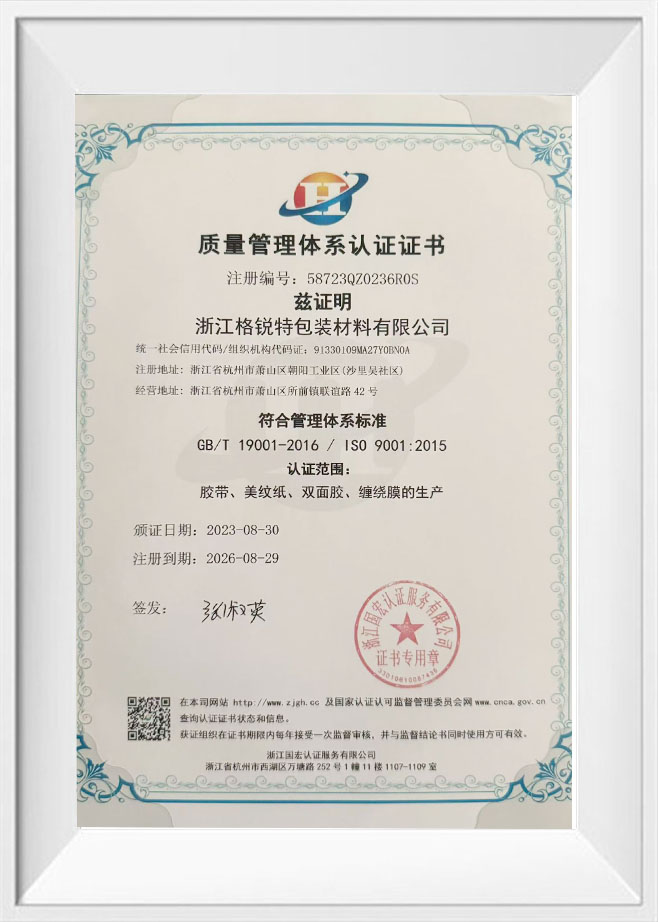 Quality Management System Certification Certificate
 -
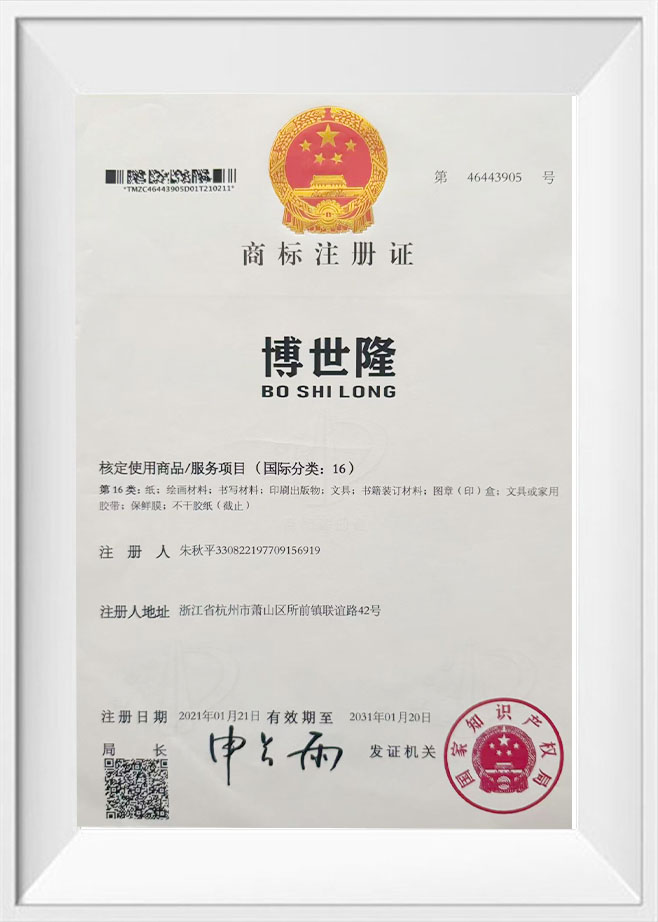 Trademark Registration Certificate
 -
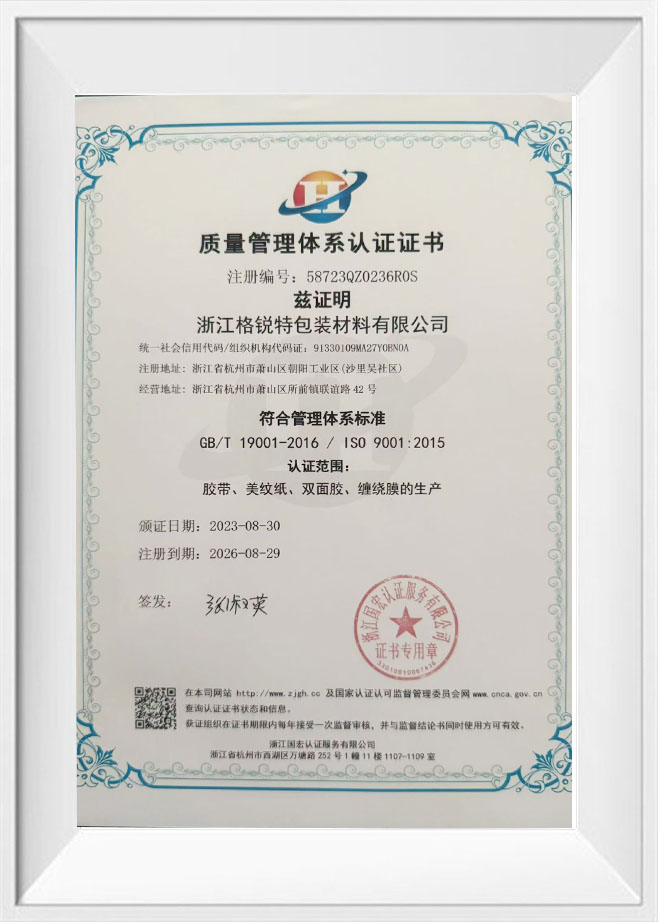 Quality Management System Certification Certificate
News
-
Company News 2026-03-31
Zhejiang Geruite Packaging Materials Co., Ltd., a leading packaging solution provider based in Zhejiang Province, has successfully shipped nine containers of transparent stretch film to Los Angeles. This export marks another milestone in the company's conti...
View More -
Industry News 2026-03-25
What Is Kraft Paper Tape and Why Does It Matter for Packaging? Kraft paper tape is a paper-based adhesive tape made from kraft pulp — a wood pulp processed through the kraft chemical method that produces strong, tear-resistant fibers. Unlike plastic-based tap...
View More -
Industry News 2026-03-25
What Painters Tape Actually Does — and Where Most Users Choose Wrong Painters tape is a pressure-sensitive masking tape engineered to protect surfaces during painting, finishing, and surface preparation. Its defining characteristic is clean removal without ad...
View More
Contact us now
Protective Film Industry Knowledge Extension
Adhesive Chemistry in Protective Films: Why Tack Level Is a Precision Decision
Zhejiang Geruite Packaging Materials Co., Ltd. produces clear vinyl protective film for surface protection applications across construction, electronics, metal fabrication, and appliance manufacturing — and the specification question we encounter most consistently is adhesive tack level. Buyers frequently request "strong adhesion" without realizing that over-tack on sensitive surfaces causes the very damage the film is meant to prevent.
Protective film adhesives are almost universally pressure-sensitive (PSA), applied in coat weights typically ranging from 5 to 25 g/m². Three resin systems dominate: acrylic, rubber-based, and silicone. Acrylic PSAs offer the best balance of UV resistance, aging stability, and clean removal — they do not yellow or harden over extended dwell time, making them the standard choice for outdoor or long-duration applications. Rubber-based adhesives provide higher initial tack at lower cost but are prone to adhesive transfer on prolonged exposure to heat or UV, leaving residue on polished metal, coated glass, and painted surfaces. Silicone adhesives are reserved for extreme temperature applications and high-energy substrates where standard acrylics fail to bond.
Peel adhesion values — measured in g/25mm or N/25mm — should always be matched to the substrate's surface energy. Low-energy surfaces such as powder-coated panels, PE plastic trim, and polypropylene components require tack values in the 30–80 g/25mm range. High-energy surfaces such as stainless steel, aluminum, and glass can accommodate 80–200 g/25mm without risk of surface damage, and often require higher tack to prevent film lifting during transport and handling. Specifying a single tack grade across mixed substrate types is the root cause of most protective film failures in fabrication and transit environments.
Backing Film Construction: PE, PVC, and PET Compared for Surface Protection
The backing film in a protective film product carries the adhesive layer and determines the mechanical properties of the finished tape: conformability, tensile strength, elongation, and resistance to tearing during removal. Three backing materials account for the vast majority of protective film applications, and each has a distinct performance profile that makes it better suited to specific use cases.
Polyethylene (PE) is the most widely used backing for general-purpose surface protection. It is soft, highly conformable, and tears cleanly by hand — a practical advantage on fabrication floors where workers are handling and trimming film continuously. PE backing is available in low-density (LDPE) and linear low-density (LLDPE) variants; LLDPE provides meaningfully better puncture resistance and tensile strength at equivalent thickness, making it preferable for applications where the protected surface will be handled, stacked, or transported before the film is removed.
PVC backing offers higher stiffness and better conformability to curved profiles than PE, and accepts printing well — making it common in automotive protection films and branded surface protection applications where identification printing is required. However, PVC's environmental profile is increasingly a procurement liability: several major manufacturing sectors have adopted PVC-free sourcing policies, and regulatory pressure under the EU's REACH framework continues to expand restrictions on plasticizers used in flexible PVC formulations.
PET backing delivers the highest tensile strength and dimensional stability of the three, with minimal elongation under tension. This makes it the correct specification for clear protective wrap on precision-machined components, optical surfaces, and electronic display panels, where any stretch or creep in the backing during handling could cause the adhesive layer to shift and create surface contact marks. PET-backed protective film is not hand-tearable and requires cutting tools on the production line — a workflow constraint worth confirming before specifying it for high-turnover applications.
Managing Protective Film Performance Through the Fabrication and Transit Cycle
Surface protective films are applied at the point of manufacture and removed at the point of installation or end-use — a dwell period that can span days in a fabrication shop or months in an intercontinental supply chain. The primary failure modes that emerge over extended dwell time are adhesive transfer, film embrittlement, and edge lift, each driven by a different environmental variable.
Adhesive transfer — residue left on the substrate surface after film removal — is most commonly caused by UV degradation of rubber-based adhesives, or by exposure to elevated temperatures that soften the adhesive and promote migration into microscopic surface features. For outdoor storage or applications involving heat exposure above 60°C, specifying an acrylic adhesive system is non-negotiable. Even within acrylic systems, high-temperature acrylic formulations rated to 100–120°C are available for applications near heat sources during fabrication, such as panels stored adjacent to welding or powder-coat ovens.
Film embrittlement under UV exposure is a separate failure mode from adhesive degradation. Standard PE backing films begin to lose elongation and develop surface crazing after approximately 3–6 months of direct outdoor UV exposure, making removal increasingly difficult — the film tears into small fragments rather than peeling cleanly. UV-stabilized PE films, formulated with hindered amine light stabilizers (HALS), extend outdoor service life to 12–18 months without embrittlement, and are the correct specification for construction panels, architectural aluminum profiles, and pre-finished building materials that will be stored or installed outdoors before the protection film is removed. At Zhejiang Geruite Packaging Materials Co., Ltd., UV-stabilized backing options are available across our protective film range for customers with extended outdoor exposure requirements.
Application Techniques That Determine Whether Protective Film Actually Protects
Film specification accounts for roughly half of protective film performance outcomes in real production environments. Application technique determines the rest. The two most common application failures — edge lift and trapped air bubbles — are both technique-driven problems that occur regardless of film quality.
Edge lift begins during application when the film is applied under excessive tension. Stretching the film to cover a surface causes it to contract elastically after release, pulling the edges away from the substrate. The correct technique is to apply the film at zero tension — lay it onto the surface rather than stretch it — and use a rubber squeegee or foam roller to press from the center outward, eliminating air and ensuring full edge contact. On large panels, a wet application method (a dilute soap-and-water solution misted onto the substrate surface before film placement) allows repositioning before the adhesive fully engages, preventing trapped air and misalignment on first application.
For automated application on production lines, roller pressure and web tension settings are the critical variables. Nip roll pressure should be sufficient to achieve full adhesive contact across the substrate width without elongating the film backing — typically 2–4 bar for PE-backed films on flat panel substrates. Temperature-controlled application rollers (30–40°C) improve initial adhesive wet-out on low-energy surfaces, reducing edge lift incidence on powder-coated and painted panels without requiring a higher-tack adhesive specification that could cause removal difficulties later in the supply chain.
CONTACT DETAILS
- Address:No. 241, Yaojiafan, Zhangpanqiao, Shushan Street, Xiaoshan District, Hangzhou City, Zhejiang Province, China
- TEL:+86-0571-83175630
- Phone:+86-13336160217
- Email:[email protected]
PRODUCTS
NEWS CENTER
MOBILE TERMINAL
Copyright© Zhejiang Geruite Packaging Materials Co., Ltd. All Rights Reserved.
Custom clear vinyl protective film