-
 +86-0571-83175630
-
 [email protected]

 English
  Español
  عربى
عربى 
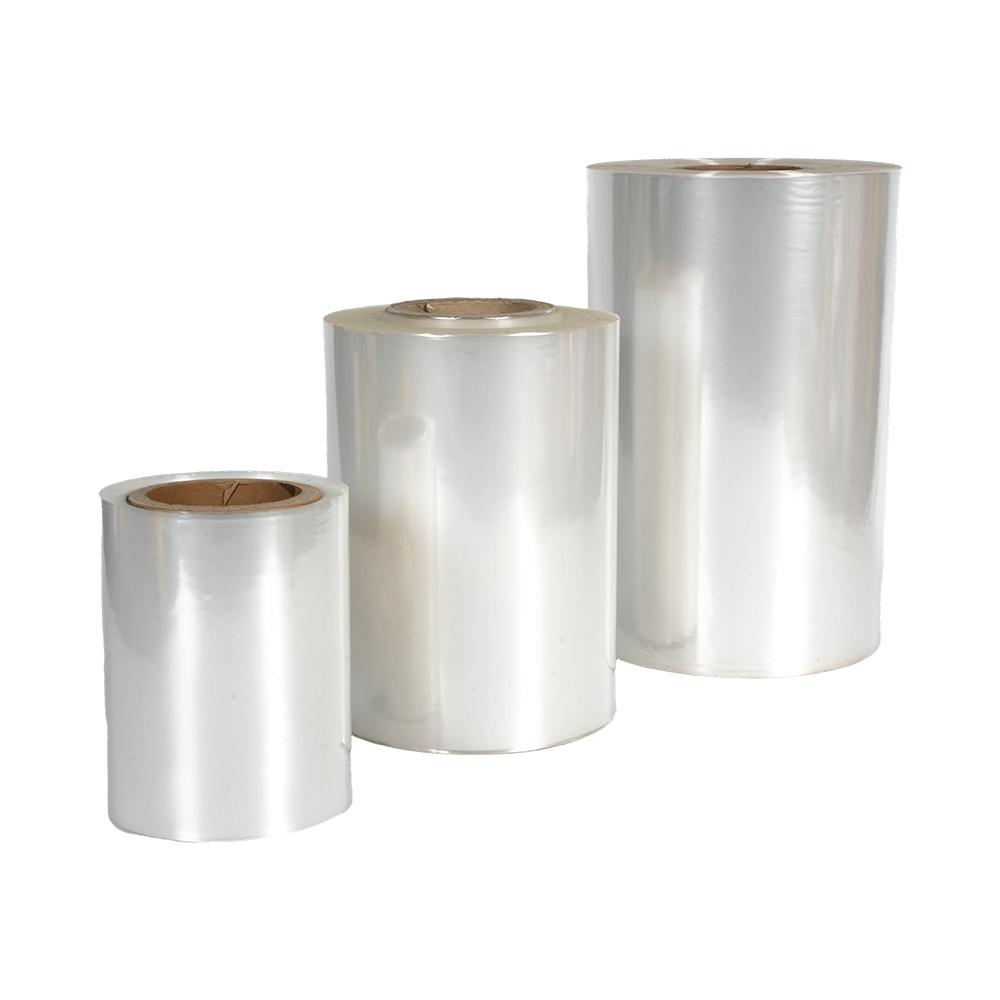

Honor
-
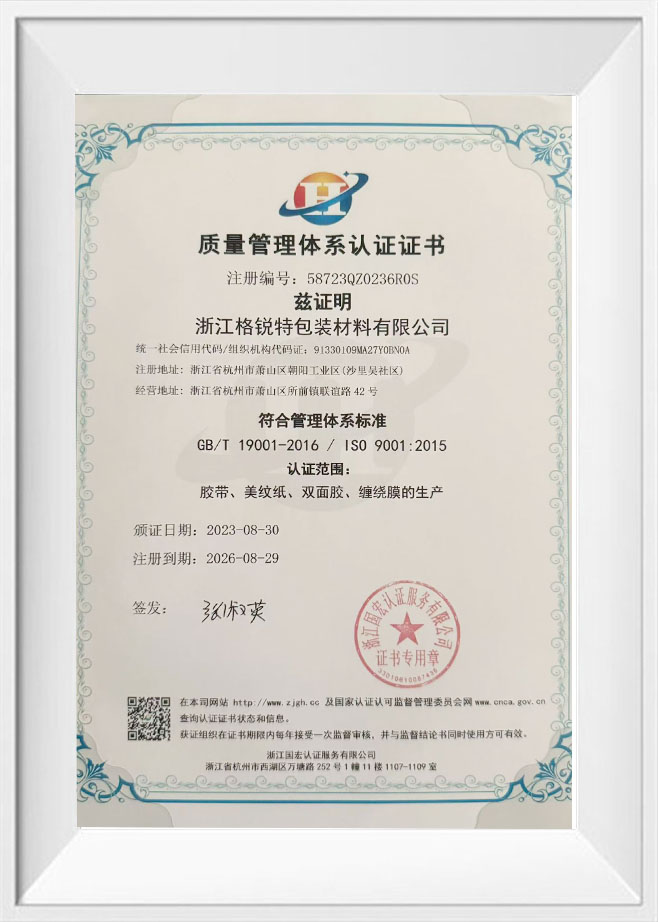 Quality Management System Certification Certificate
 -
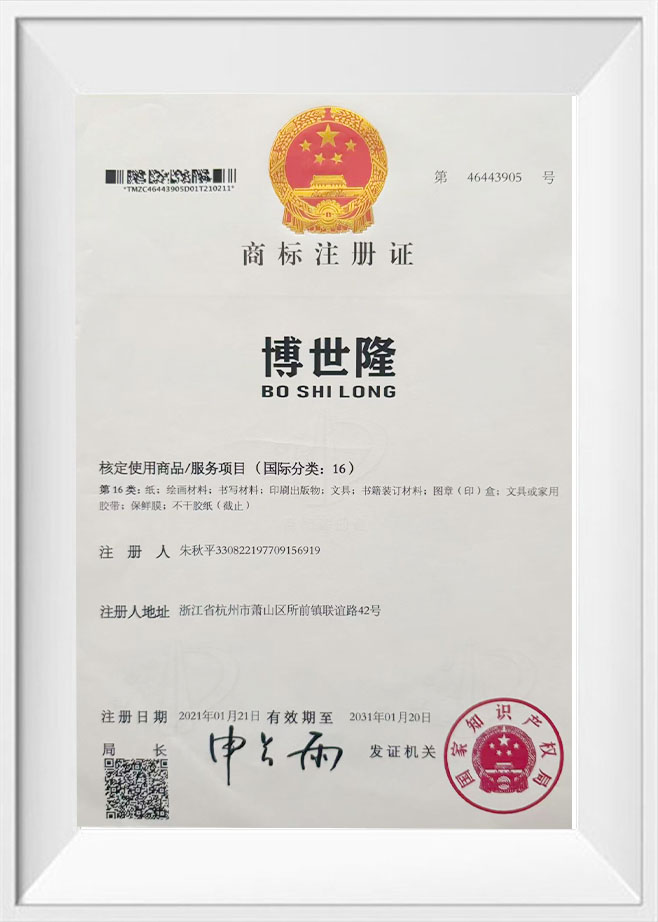 Trademark Registration Certificate
 -
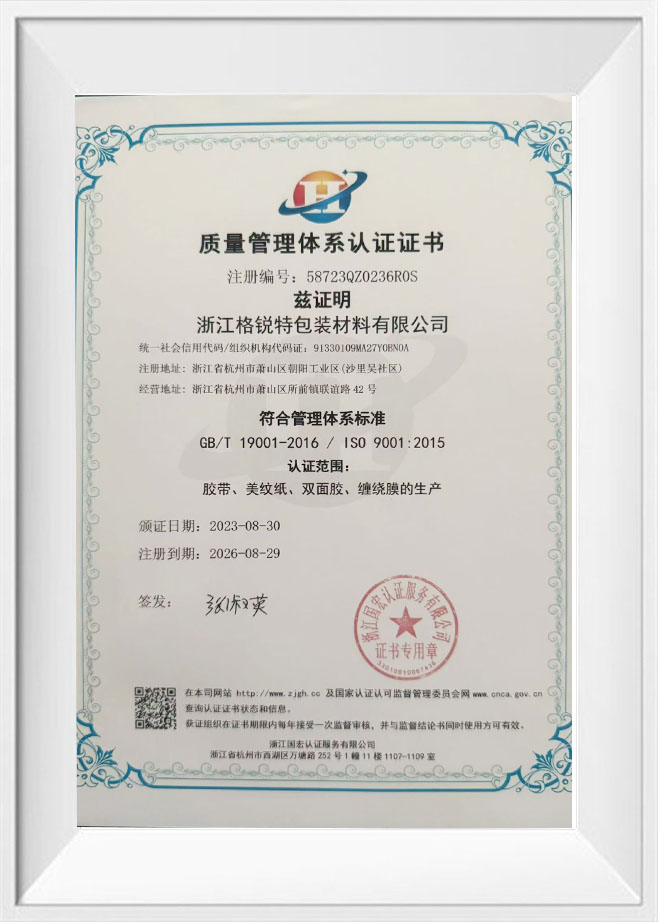 Quality Management System Certification Certificate
News
-
Company News 2026-03-31
Zhejiang Geruite Packaging Materials Co., Ltd., a leading packaging solution provider based in Zhejiang Province, has successfully shipped nine containers of transparent stretch film to Los Angeles. This export marks another milestone in the company's conti...
View More -
Industry News 2026-03-25
What Is Kraft Paper Tape and Why Does It Matter for Packaging? Kraft paper tape is a paper-based adhesive tape made from kraft pulp — a wood pulp processed through the kraft chemical method that produces strong, tear-resistant fibers. Unlike plastic-based tap...
View More -
Industry News 2026-03-25
What Painters Tape Actually Does — and Where Most Users Choose Wrong Painters tape is a pressure-sensitive masking tape engineered to protect surfaces during painting, finishing, and surface preparation. Its defining characteristic is clean removal without ad...
View More
Contact us now
Shrink Film Industry Knowledge Extension
Why Film Thickness and Gauge Matter More Than You Think
Zhejiang Geruite Packaging Materials Co., Ltd. works closely with procurement teams across logistics, retail, and industrial manufacturing — and one of the most consistent sources of packaging failure we encounter is gauge mismatching. Buyers often default to a single film specification across all SKUs, not realizing that shrink wrap performance is directly tied to the relationship between film gauge, product weight, and surface profile.
Clear shrink wrap is commercially available in gauges typically ranging from 35 to 200 gauge (approximately 9 to 50 microns). Thinner films in the 35–60 gauge range conform tightly to smooth, lightweight products and yield a high-gloss retail finish. Heavier gauges from 75–100 gauge are better suited to irregular shapes, sharp corners, or products bundled together where film puncture resistance becomes critical. Using an undersized gauge on a product with protruding edges doesn't just risk puncture during handling — it creates micro-tears that compromise the sealed environment, accelerating moisture ingress and oxidation in sensitive goods.
The practical test is straightforward: apply the film manually around the product profile and check whether it conforms without bridging at recessed areas. If bridging occurs, the film's shrink ratio — the percentage the film contracts in each orientation when heat is applied — may be insufficient. Bi-axially oriented shrink films offer balanced shrink in both machine and transverse directions, ideal for irregular geometries. Mono-axially oriented films shrink predominantly in one direction and are better suited to sleeve labeling or tube-format applications.
Heat Tunnel Settings and Film Compatibility: Getting the Shrink Cycle Right
The quality of a finished shrink wrap seal depends less on the film specification than most operators assume, and more on whether the heat tunnel parameters are properly matched to the film chemistry. Two variables dominate: conveyor speed and tunnel temperature. Running too fast leaves the film under-shrunk, with loose folds and open corners. Running too slow causes over-shrinkage, which stresses seams, produces burn-through holes, and can distort or crush lighter products underneath.
PVC shrink film operates effectively in the range of 120–160°C tunnel temperature, while polyolefin (POF) films — now the preferred option in food-contact and retail environments due to their odorless combustion and FDA compliance — typically require 120–175°C depending on thickness and conveyor speed. The critical mistake is treating temperature as the only variable. Conveyor dwell time — the total seconds a product spends inside the tunnel — is equally determinative. A slower belt at lower temperature often yields a cleaner finish than a high-temperature, high-speed combination that shocks the film unevenly.
For operations running mixed product sizes on the same line, the most practical calibration method is to run a test batch at the midpoint of the film manufacturer's recommended temperature range, adjust conveyor speed first, and only change temperature in 5°C increments after speed optimization is exhausted. This approach reduces film waste during calibration and protects sealing equipment from thermal stress caused by repeated large temperature swings.
Manual Wrapping Workflows: Where the Shrink Wrap Hand Roller Adds Measurable Value
Not every packaging operation justifies the capital cost or floor space of a fully automated shrink tunnel line. For low-to-mid volume fulfillment, field-based packing, or irregular items that don't feed reliably through automated equipment, manual wrapping workflows remain the practical standard — and the shrink wrap hand roller is the central tool that determines whether the manual process is efficient or chaotic.
A hand roller serves two functions in a manual shrink wrap workflow: tensioning the film uniformly as it is applied around the product, and maintaining consistent overlap at each pass. Without a roller, operators tend to apply film with uneven tension — tight on one face, loose on another — which translates directly to uneven shrinkage when heat is applied and results in wrinkled, commercially unacceptable finishes. A well-designed hand roller maintains a fixed core-to-film gap that regulates tension automatically as the operator moves around the product.
For pallet-level wrapping using stretch or shrink film, ergonomic handle design becomes a functional issue, not just a comfort consideration. Repetitive stress injuries from high-volume manual wrapping are a documented productivity and liability concern in warehouse environments. Rollers with padded, rotating handles reduce grip fatigue significantly compared to fixed-core dispensers. For operations where a single operator wraps more than 50 units per shift manually, the investment in a quality hand roller with an ergonomic grip pays back in reduced injury claims and sustained throughput well within the first quarter of use. At Zhejiang Geruite Packaging Materials Co., Ltd., our film products are engineered with consistent gauge tolerance specifically to support smooth, predictable hand-roller dispensing without film tracking or edge curl during application.
Sustainability Considerations in Shrink Film Specification
As extended producer responsibility (EPR) legislation expands across major export markets — including the EU's Packaging and Packaging Waste Regulation (PPWR), the UK's Plastic Packaging Tax, and equivalent frameworks emerging in Southeast Asia — the choice of shrink film material is increasingly a compliance decision, not just a performance one.
The two dominant shrink film materials, PVC and polyolefin (POF), present very different end-of-life profiles. PVC is increasingly restricted or heavily taxed in regulated markets due to its chlorine content and the generation of hydrochloric acid emissions during incineration. POF — comprising polyethylene (PE) and polypropylene (PP) variants — is compatible with existing polyolefin recycling streams in most developed markets, provided it is collected separately from paper and other materials.
For manufacturers exporting to EU buyers under growing supply chain due diligence requirements, declaring film composition and recyclability on packaging documentation is becoming standard practice. Specifying a film with a single-polymer construction (mono-material PE or PP) rather than a multi-layer co-extrusion improves recyclability classification under the RecyClass and CEFLEX frameworks, which several major European retailers now require as a supplier qualification criterion. Downgauging — reducing film thickness while maintaining required mechanical performance through improved polymer formulations — is a parallel strategy that reduces material consumption per wrapped unit by 15–25% without compromising seal integrity, directly reducing both material cost and plastic tax liability.
CONTACT DETAILS
- Address:No. 241, Yaojiafan, Zhangpanqiao, Shushan Street, Xiaoshan District, Hangzhou City, Zhejiang Province, China
- TEL:+86-0571-83175630
- Phone:+86-13336160217
- Email:[email protected]
PRODUCTS
NEWS CENTER
MOBILE TERMINAL
Copyright© Zhejiang Geruite Packaging Materials Co., Ltd. All Rights Reserved.
Custom clear shrink wrap