-
 +86-0571-83175630
-
 [email protected]

 English
  Español
  عربى
عربى 
Polyolefin POF Shrink Film: Properties, Grades, and Packaging Applications
Content
- 1 What Polyolefin POF Shrink Film Is and How It Differs from Other Shrink Materials
- 2 Multilayer Structure and How Coextrusion Determines Performance
- 3 Key Technical Specifications and What They Mean in Practice
- 4 POF Shrink Film Grades and Speciality Variants
- 5 Equipment Compatibility and Line Optimisation
- 6 Sustainability Profile and Regulatory Considerations
What Polyolefin POF Shrink Film Is and How It Differs from Other Shrink Materials
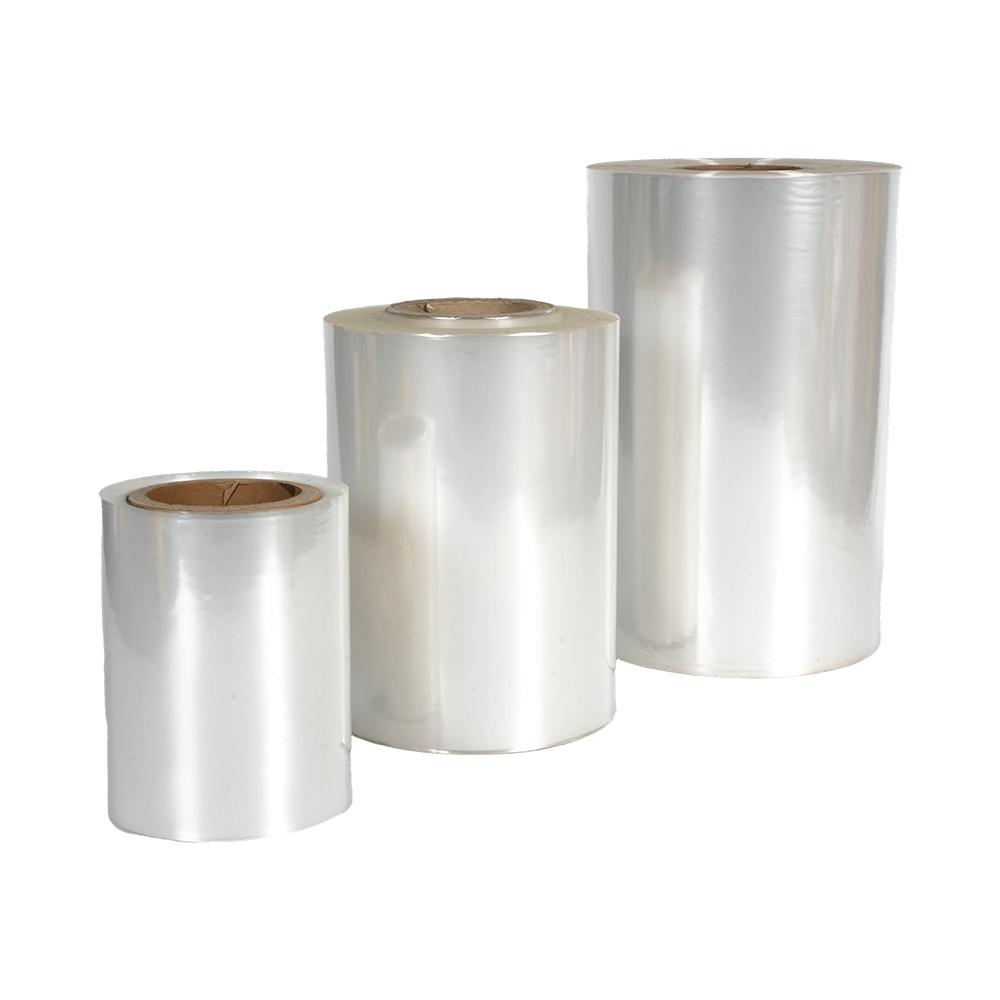
Polyolefin POF shrink film is a multilayer coextruded plastic film that shrinks tightly around a product when exposed to heat, conforming to the shape of the item and forming a clear, taut, professional-looking package. It is produced from blends of polyethylene and polypropylene resins — both members of the polyolefin polymer family — which are coextruded through a blown or flat die process and biaxially oriented to build in the shrink characteristics that activate during tunnel sealing.
POF film displaced PVC shrink film as the dominant material in retail and e-commerce packaging over the past two decades for several converging reasons. POF is chlorine-free, meaning it does not generate hydrochloric acid or dioxins during heat sealing or incineration — a critical advantage in food-contact applications and in markets with strict waste incineration regulations. It also seals at lower temperatures than PVC, runs at higher speeds on modern L-bar and side-seal equipment, and produces films that are optically clearer and more elastic, with better memory and resistance to puncture during transit.
The film is used across a wide range of industries including food packaging, cosmetics, pharmaceuticals, printed media, toys, stationery, and multipack bundling — essentially wherever a clear tamper-evident wrap is needed on a retail or distribution item.
Multilayer Structure and How Coextrusion Determines Performance
Most commercial POF shrink film is produced in a three-layer or five-layer coextruded structure. The outer skin layers are typically a polyethylene-based resin formulated for sealability, low coefficient of friction, and anti-block performance. The core layer or layers use polypropylene or a propylene-ethylene copolymer to provide stiffness, clarity, and the primary shrink force.
This layered architecture allows film converters to tune properties independently for each functional requirement. The skin layers can be modified with slip additives to improve machine runnability on high-speed equipment without affecting the optical properties of the core. The core formulation can be adjusted to shift the shrink onset temperature, alter the balance between machine-direction and cross-direction shrink, or improve hot-tack strength for difficult-to-seal pack geometries.
Five-layer structures generally outperform three-layer films in tensile strength, puncture resistance, and shrink uniformity — particularly at lower gauges — which is why five-layer coextrusion has become the standard for premium packaging applications where film gauge is being reduced to lower material cost without sacrificing performance.
Key Technical Specifications and What They Mean in Practice
Selecting POF shrink film for a packaging application requires evaluating a set of measurable parameters that determine whether the film will run reliably and produce acceptable finished packs.
Film Gauge (Thickness)
POF shrink film is available in gauges typically ranging from 12 to 25 microns for standard packaging, with heavy-duty industrial grades extending to 35–40 microns. Thinner films reduce material cost per pack and are preferred for high-speed automated lines where roll change frequency needs to be minimised. Heavier gauges are specified for products with sharp corners or rough surfaces — such as corrugated trays, hardware, or bundled cans — where puncture resistance during shrink tunnel transit is a concern. Gauge tolerance is an important quality indicator: variation greater than ±10% causes inconsistent seal strength and uneven shrink appearance.
Shrink Rate and Shrink Force
Shrink rate — expressed as the percentage reduction in film dimensions at a specified temperature — is typically measured at 120°C and 150°C in both the machine direction (MD) and transverse direction (TD). Standard POF films exhibit 50–70% free shrink in each direction at 150°C, producing a balanced, wrinkle-free wrap on symmetrical products. Films with higher TD shrink relative to MD are used for applications where the product is significantly wider than it is long, such as books or flat-panel products. Shrink force — the tension the film exerts as it contracts — affects how tightly the pack is held and whether fragile products might be distorted; lower shrink force grades exist for delicate items such as blister cards and soft-cover books.
Seal Strength and Seal Temperature Range
POF film seals within a temperature window typically between 130°C and 175°C on wire or band sealers. A wide sealing window is operationally valuable because it allows the machine to maintain acceptable seal integrity despite minor temperature fluctuations — particularly important on older or less precisely controlled equipment. Seal strength is measured as the force required to peel or rupture the seal and is typically specified at 1.5–3.5 N/15mm for retail wrap applications. Films with higher seal strength are preferred for heavier products where the seal must bear the item's weight during handling.
Optical Properties
Clarity and gloss are key commercial attributes for retail-facing packaging. POF film haze values of below 3% are standard for premium grades, which ensures the packaged product is visible without distortion. Gloss levels above 90 (measured at 45°) produce the high-shine appearance associated with quality presentation on shelf. Anti-fog grades are available for food packaging applications — particularly fresh produce and refrigerated items — where condensation on the film interior would obscure the product.
| Parameter | Typical Value Range | Relevance |
|---|---|---|
| Film Gauge | 12–40 microns | Material cost, puncture resistance |
| Free Shrink (MD/TD) | 50–70% at 150°C | Pack tightness, wrinkle-free finish |
| Seal Temperature | 130–175°C | Machine compatibility, seal integrity |
| Haze | <3% | Product visibility on shelf |
| Tensile Strength (MD) | 35–55 MPa | Film runnability, transit durability |
POF Shrink Film Grades and Speciality Variants
Beyond standard general-purpose POF film, a range of specialised grades addresses specific packaging requirements across different market segments.
Perforated POF Film
Micro-perforated POF is produced with a laser or mechanical perforation pattern — typically 16–64 perforations per square inch — that allows air to escape from the package during shrinking. This eliminates the pressure build-up that causes wrap bursting or dog-earing on sealed ends, particularly with lightweight, air-trapping products such as boxed games, greeting cards, and software packaging. Perforated film is also used for fresh produce to allow gas exchange and prevent condensation.
Crosslinked POF Film
Irradiation crosslinking creates covalent bonds between polymer chains in the film, significantly improving hot strength — the film's resistance to tearing while in the softened state at shrink tunnel temperatures. Crosslinked POF runs at higher line speeds without film breaks, achieves more consistent shrink at lower tunnel temperatures, and produces tighter, more uniform wraps on irregular product shapes. It is the preferred grade for high-output automated packaging lines in food, pharmaceutical, and consumer goods sectors.
Anti-Fog POF Film
Anti-fog additives incorporated into the skin layers reduce the surface tension of water droplets forming on the film interior, causing them to spread into a continuous transparent layer rather than condensing into opaque droplets. This maintains product visibility in refrigerated retail display environments and is required for fresh food categories including meat, poultry, bakery, and fresh produce.
Printed POF Film
POF film accepts flexographic and rotogravure printing on the surface before slitting and rolling. Printed shrink film combines the functional benefits of a clear overwrap with brand graphics, promotional messaging, or regulatory text — eliminating the need for a separate printed label on the packaged product. Registration accuracy during printing and printing-to-shrink distortion compensation are critical quality factors that separate premium converters from commodity suppliers.
Equipment Compatibility and Line Optimisation
POF shrink film performance on a packaging line is determined as much by equipment setup as by film specification. The three main equipment variables — sealer type, tunnel temperature profile, and conveyor speed — must be matched to the specific film grade and product being wrapped.
L-bar sealers are the most common configuration for retail wrapping of individual products. The film is formed into a tube around the product, and the L-shaped sealing bar simultaneously seals and cuts both the end seal and the side seam in one motion. Side-seal machines are preferred for continuous high-volume operations, forming the wrap from a centre-folded roll and sealing only the two open ends. Both machine types require consistent film tension control to prevent MD stretching before the seal, which causes weak seal points and film distortion in the tunnel.
Shrink tunnel temperature should be set to achieve full shrink within 3–6 seconds of dwell time for most standard POF grades. Excessive temperature or dwell time causes over-shrink, burn-through at corners, and film hazing. Insufficient heat leaves loose film, open seams, and unacceptable cosmetic appearance. Tunnel airflow pattern — top and bottom jets versus recirculating hot air — also affects how evenly heat is applied to different product geometries, and tunnel selection should account for the product range being wrapped.
Sustainability Profile and Regulatory Considerations
POF shrink film's environmental profile compares favourably with PVC and polystyrene shrink alternatives. It is free of chlorine, plasticisers, and heavy-metal stabilisers, which simplifies compliance with food-contact regulations including EU Regulation 10/2011 and FDA 21 CFR standards for food packaging materials. Its combustion produces carbon dioxide and water without toxic by-products, which is relevant for waste-to-energy facilities and incinerators in markets where packaging incineration is the primary disposal route.
Recyclability is an evolving area. Standard POF film is technically recyclable in polyolefin mixed streams, but in practice the thin gauge and contamination from food residues limit collection and reprocessing rates. Mono-material POF structures — where all layers use compatible polyethylene or polypropylene resins without tie layers or barrier coatings — are increasingly specified by brand owners seeking to comply with Extended Producer Responsibility (EPR) schemes in Europe and similar regulations in other markets that require packaging to be designed for recyclability.
Downgauging — reducing film thickness while maintaining performance — is the most immediately accessible sustainability lever for packaging operations using POF film. Moving from a 19-micron to a 15-micron crosslinked grade on a high-speed automated line can reduce film consumption by 20–25% per pack with no change in packaging quality, directly reducing both material cost and plastic weight per unit shipped.
LATEST POST
Let’s create something amazing together
contact us
CONTACT DETAILS
- Address:No. 241, Yaojiafan, Zhangpanqiao, Shushan Street, Xiaoshan District, Hangzhou City, Zhejiang Province, China
- TEL:+86-0571-83175630
- Phone:+86-13336160217
- Email:[email protected]
- WeChat/WhatsApp:+86-18058115265
PRODUCTS
NEWS CENTER
MOBILE TERMINAL
Copyright© Zhejiang Geruite Packaging Materials Co., Ltd. All Rights Reserved.
Privacy Wholesale industrial packaging tape Manufacturers