-
 +86-0571-83175630
-
 [email protected]

 English
  Español
  عربى
عربى 
PET Packing Strap: Choosing Durable Polyester Strapping for Heavy Loads
Content
- 1 What PET Packing Strap Is and How Polyester Strapping Is Made
- 2 PET vs PP vs Steel Strapping: What the Test Values Actually Mean
- 3 Five PET Strap Specifications to Check Before You Order
- 4 Machine Compatibility, Tools, and Handling Factors
- 5 Cost per Secured Pallet, Supply Risk, and Sustainability
- 6 Frequently Asked Questions About PET Packing Strap
A pallet of aluminum frames arrives with a snapped PP strap, a shifted top layer, and a 400 km ride ahead. That scene repeats daily, and it is why buyers switch to PET packing strap for loads that weigh, settle, or travel far. PET is the polyester cousin of polypropylene: it stretches less, holds tension longer, and handles humidity and shock better while staying light and safe to cut.
This guide helps procurement, warehouse, and production teams specify the right polyester strapping on the first order: how PET is made, how it compares with PP and steel, which specifications to verify, and what a secured pallet really costs.
What PET Packing Strap Is and How Polyester Strapping Is Made
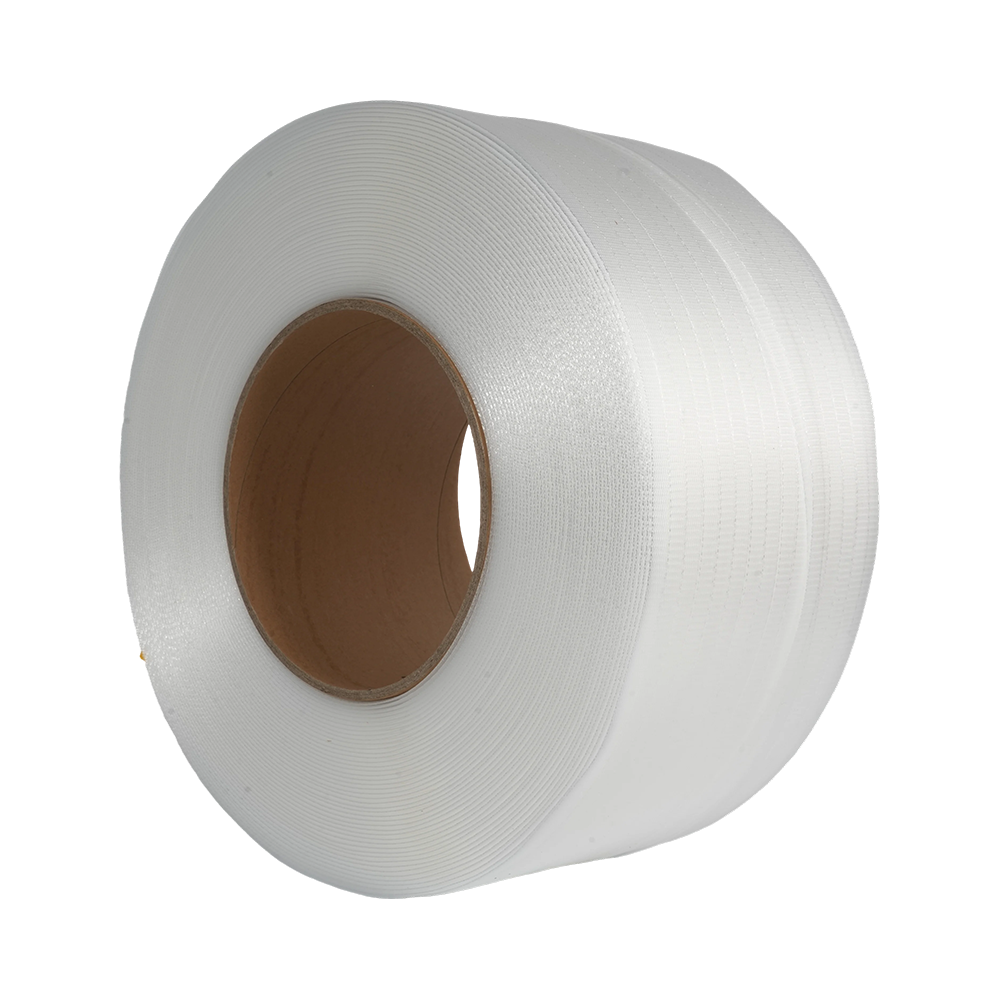
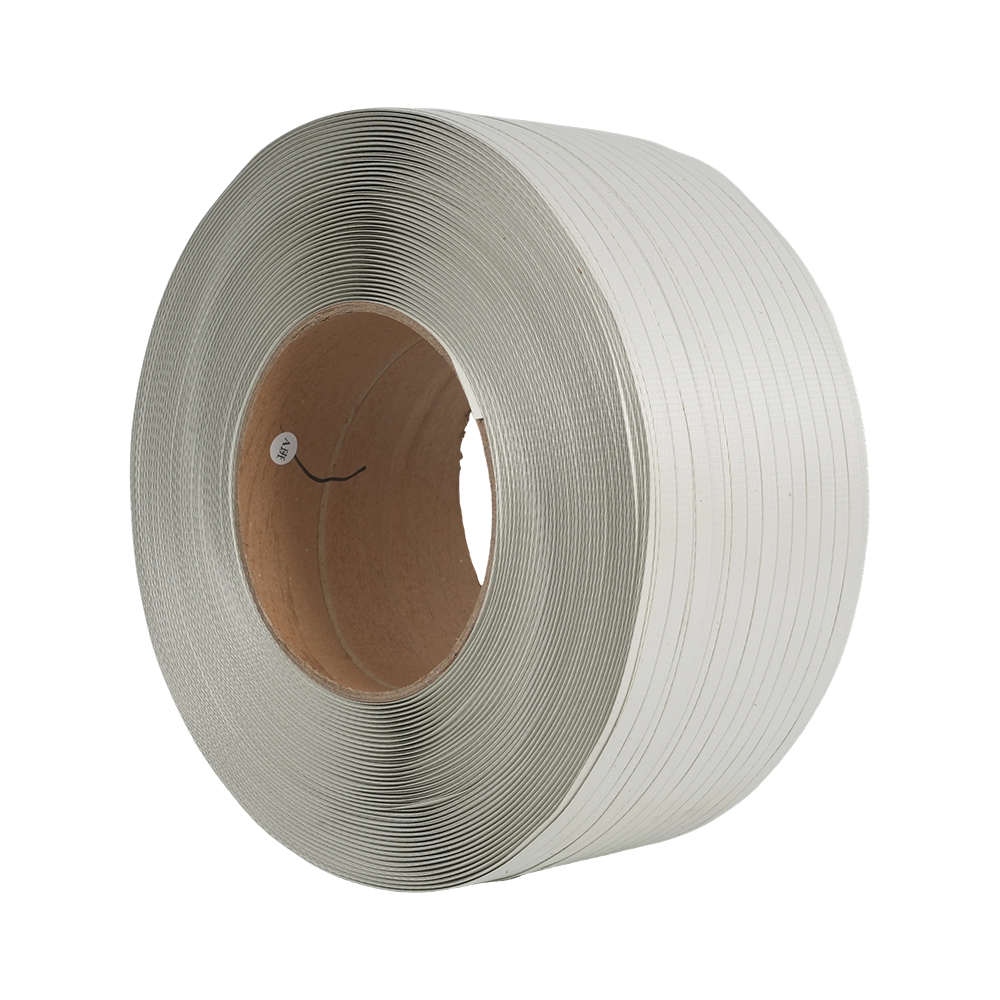
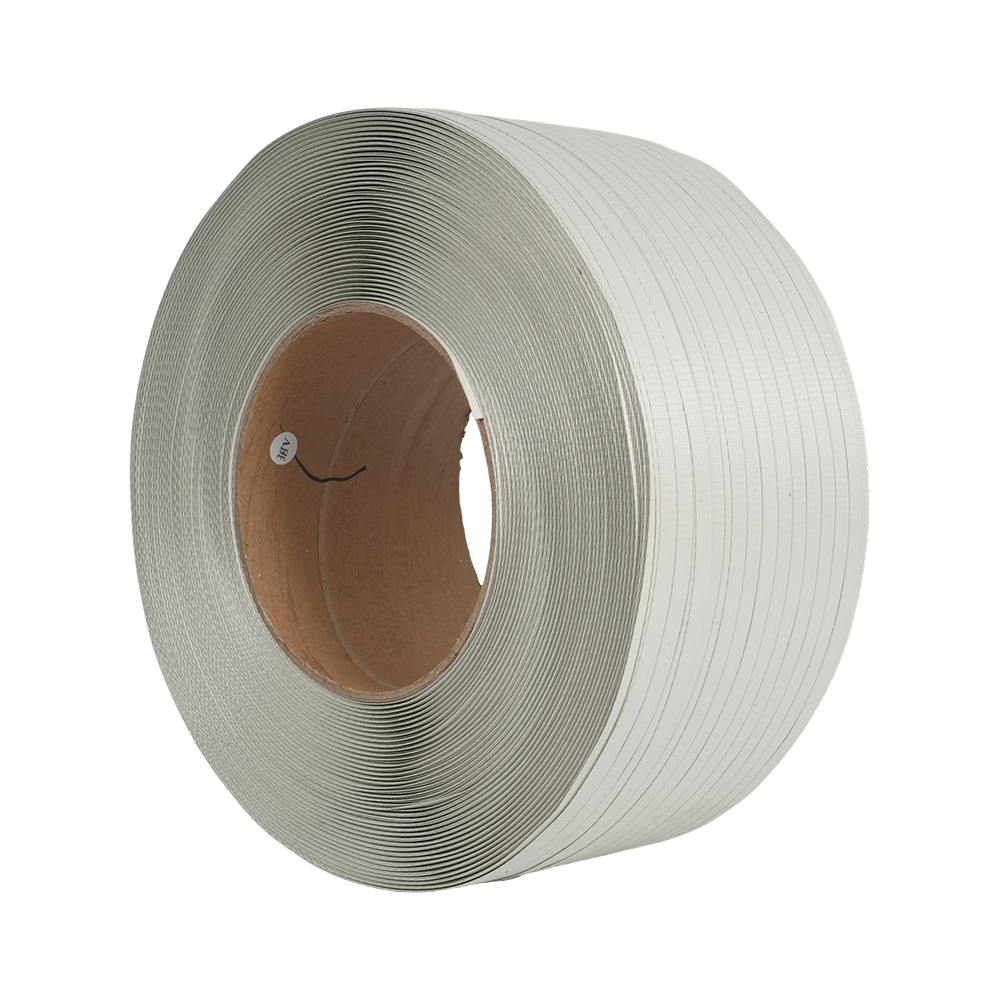
PET packing strap is a flat polyester strapping band extruded from polyethylene terephthalate, in typical widths of 9.5 to 19 mm and thicknesses of 0.5 to 1.2 mm, designed for securing palletized and heavy industrial loads.
Strapping-grade PET starts as resin, is melted, extruded into a sheet or strands, quenched, then stretched hot to align the polymer chains. This step raises tensile strength three to four times over unoriented material and is the main reason PET retains tension better than PP.
Strap orientation is the process of stretching heated PET so polymer chains align along the axis. An oriented 12 x 0.8 mm PET strap records a break load of 400 kgf or more; unoriented material does not.
Two manufacturing routes matter. Sheet extrusion produces a wide web slit into final widths, giving flat, consistent strap that feeds best through automatic heads. Multi-strand extrusion runs many straps from one die, which is cheaper but relies on uniform temperature. For a high-speed strapper, ask for camber on the actual coil, not the catalogue.
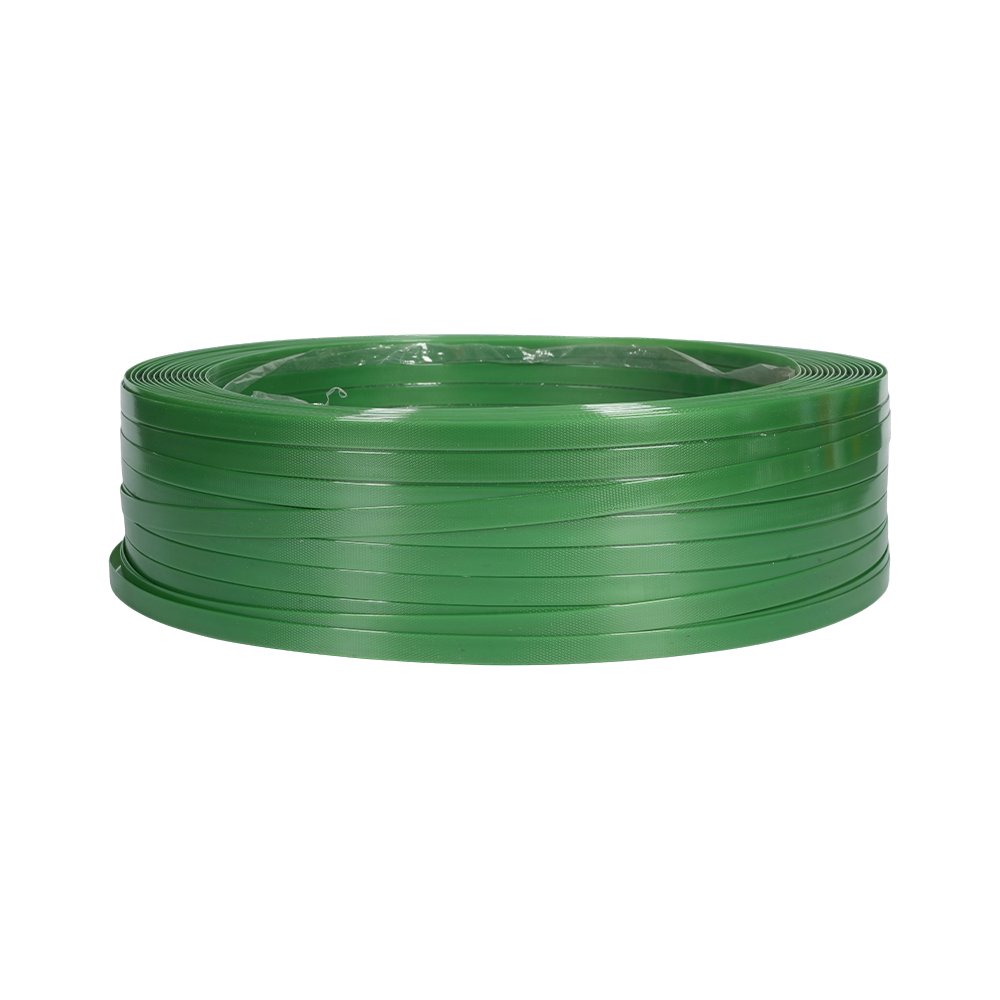 PET strapping belt SuppliersView More 1608/1610/1910/2512 Handheld Transparent P+E+T Plastic Steel BeltView Product →
PET vs PP vs Steel Strapping: What the Test Values Actually Mean
On a per-pallet basis, PET packing strap beats PP on tension retention and beats steel on handling cost for most unit loads under 1,500 kg.
The table shows mid-range values; actual figures depend on width, thickness, resin grade, and tolerances, but the ranking stays stable.
| Property | PP strap | PET strap | Steel strap |
| Elongation at break | 15-25% | 10-15% | 2-4% |
| Tension retained after 24 h | 55-65% | 75-85% | Over 90% |
| Break load, 19 x 1.0 mm | About 320 kgf | About 600 kgf | About 1,200 kgf |
| Edge protection needed | Recommended | Recommended | Mandatory |
| Corrosion risk | None | None | Yes |
- Unit loads of 300 to 1,500 kg
- Sea freight and humid storage
- Automatic strapping machines
- Loads that settle during transit
- Loads above 1,500 kg
- Hot coils or sharp-edged metal
- Lashing-grade tension limits
- Contracts that mandate steel
 Polyester Strapping Manufacturersinformation to be updatedView Product →
Five PET Strap Specifications to Check Before You Order
Width, thickness, break load, elongation at break, and camber decide whether the strap performs in your tool or machine; verify all five on the batch certificate.
Dimension codes such as 1608, 1610, 1910, and 2512 encode width and thickness: 16 x 0.8, 16 x 1.0, 19 x 1.0, and 25 x 1.2 mm. A 1608 grade suits cartons; 2512 is for bricks and dense goods.
| Specification | What it controls | Typical value |
| Width | Contact surface and tension distribution | 12.0 mm nominal |
| Thickness | Stiffness and feeding behavior | 0.8 mm nominal, +/- 0.05 mm |
| Break load | Actual holding capacity | 400 kgf minimum, machine grade |
| Elongation at break | Stretch before rupture | 10-12 percent |
| Camber | Straightness over 1 m laid flat | Under 10 mm, machine grade |
Coil inner diameter is the sixth spec nobody forgets twice: machine spindles expect 200, 406, or 510 mm, and a 406 mm coil forced onto a 200 mm hub jams instantly.
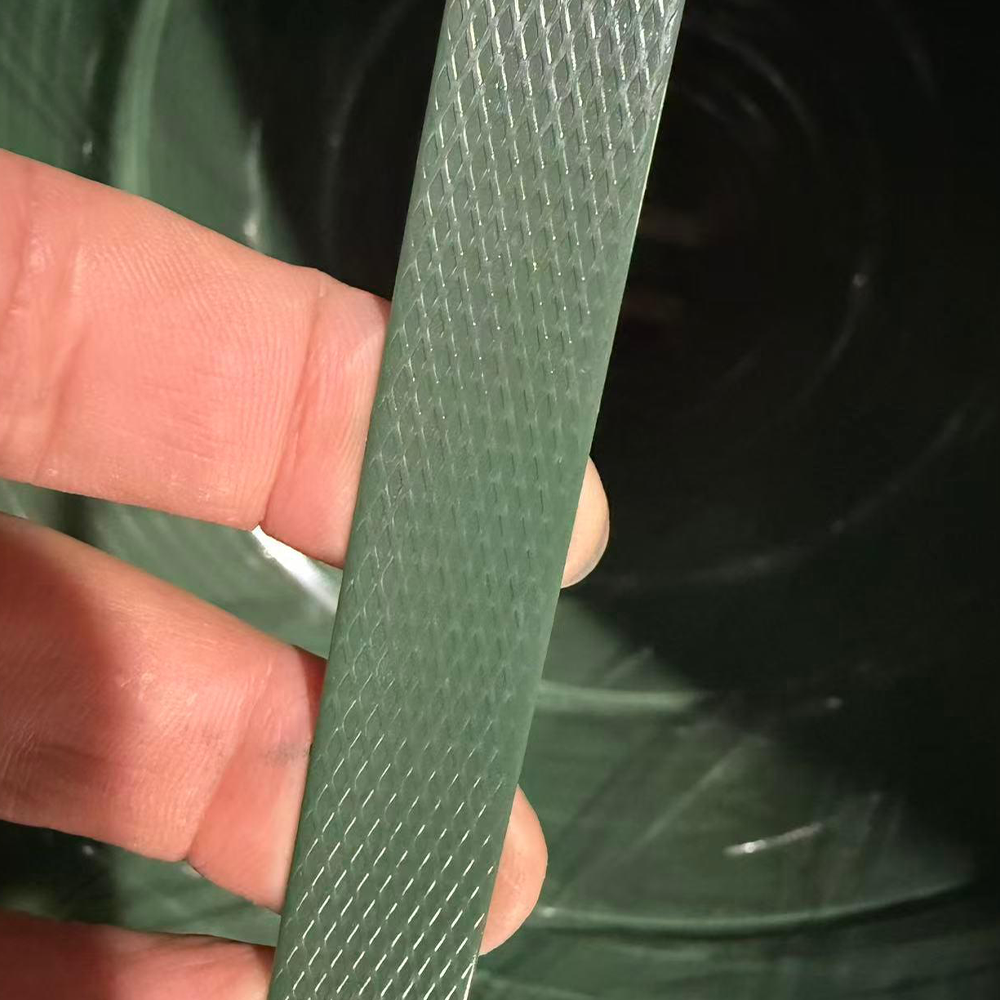 1608/1610/1910/2512 Handheld Opaque PET Plastic Steel BeltTell Us Your MessageView Product →
Machine Compatibility, Tools, and Handling Factors
PET feeds reliably through automatic strappers when coil inner diameter, camber, and surface friction match the head; compatibility is a specification exercise, not a trial-and-error exercise.
Confirm the following with the supplier and your machine manual before the first coil goes on the line:
- Coil inner diameter: 200, 406, or 510 mm to match the spindle.
- Camber and flatness: sheet-extruded tracks straighter.
- Surface friction: glossy slides faster; embossed grips better.
- Sealing: friction welding needs a clean surface; metal seals add strength.
- Dust: PET makes less dust than PP.
- Coil weight: 10 to 25 kg per coil.
Friction welding is the most common PET joining method and works well when strap surfaces are dry and uniform. For very high tension, metal seals keep more of the applied tension.
A strap-machine mismatch shows up within the first hundred cycles: crooked joints, seal slippage, or tension loss. Record the first coil batch number and strapper settings so the next order behaves identically.
Cost per Secured Pallet, Supply Risk, and Sustainability
PET costs more per metre than PP and less than steel, but the real metric is cost per secured pallet: strap price, breakage, rejected shipments, tool wear, and downtime.
A 1,000-pallet monthly program using 12 x 0.8 mm strap consumes 6,000 metres at six metres per pallet; the material price gap between PP and PET is usually smaller than the value of one damaged pallet.
Strap price + seals + tool maintenance + re-strapping labor + damaged-claim cost. Buyers who switch to PET see the first two lines rise and the last three fall.
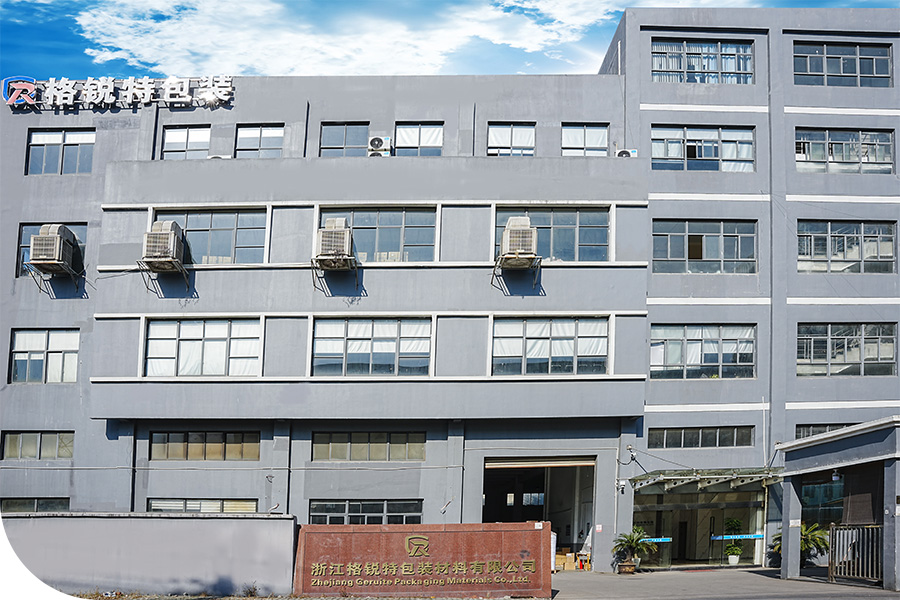
Supply risk comes from off-spec production: width variation at the die edge, brittle batches from poor resin drying, or weak seals from out-of-tolerance thickness. Buying from a manufacturer that controls extrusion, slitting, and quality checks under one roof avoids most of it. Zhejiang Geruite Packaging Materials Co., Ltd., a packaging producer in Zhejiang, runs this integrated model for its PET strapping line.
PET strap is recyclable as polyester, and replacing steel cuts per-pallet weight while removing corrosion and sharp-edge risks. For companies choosing PET packing strap in an eco-friendly packaging program, PET documents better on weight and end-of-life recovery.
Frequently Asked Questions About PET Packing Strap
What is the difference between PET and PP strapping?
PET, or polyester, elongates less, retains tension better, and withstands humidity and shock better than polypropylene. PP is cheaper and adequate for light cartons and stable loads under about 300 kg. The dividing line is load weight and storage time: if a pallet sits over two weeks or moves through high humidity, PET is safer.
Can PET packing strap replace steel strapping?
Yes, for most loads up to roughly 1,500 kg, when edge protectors are used and the strap is tensioned correctly. Steel remains preferable for hot materials, very sharp edges, and lashing-grade or regulated loads.
What does the PET strap size 1608 mean?
1608 is a dimension code: 16 mm wide and 0.8 mm thick. The common range includes 1608, 1610, 1910, and 2512, which correspond to 16 x 0.8, 16 x 1.0, 19 x 1.0, and 25 x 1.2 mm sections.
How much tension should PET strap be applied with?
Apply enough tension to make the strap firm without crushing the product, and avoid stretching it beyond 2 to 3 percent. As a rule of thumb, tension to roughly 10 to 15 percent of break load, so a 400 kgf strap carries 40 to 60 kgf. Tools with tension indicators remove the guesswork.
CONTACT DETAILS
- Address:No. 241, Yaojiafan, Zhangpanqiao, Shushan Street, Xiaoshan District, Hangzhou City, Zhejiang Province, China
- TEL:+86-0571-83175630
- Phone:+86-13336160217
- Email:[email protected]
- WeChat/WhatsApp:+86-18058115265
PRODUCTS
NEWS CENTER
MOBILE TERMINAL
Copyright© Zhejiang Geruite Packaging Materials Co., Ltd. All Rights Reserved.
Privacy Wholesale industrial packaging tape Manufacturers