-
 +86-0571-83175630
-
 [email protected]

 English
  Español
  عربى
عربى 
PET Plastic Steel Belt: The Modern Alternative to Steel Strapping for Heavy-Duty Packaging
Content
When a heavy machinery crate reaches a port warehouse after 40 days at sea, the difference between a secure bundle and a loose load often comes down to the strapping material. Steel straps rust, cut into corners, and require heavy-duty tools for tensioning. Polypropylene straps, on the other hand, creep under sustained load. PET plastic steel belt—made from recycled polyethylene terephthalate—fills the gap between these two extremes, delivering tensile strength comparable to steel at roughly 40% of the weight and without the corrosion risk.
What Is PET Plastic Steel Belt?
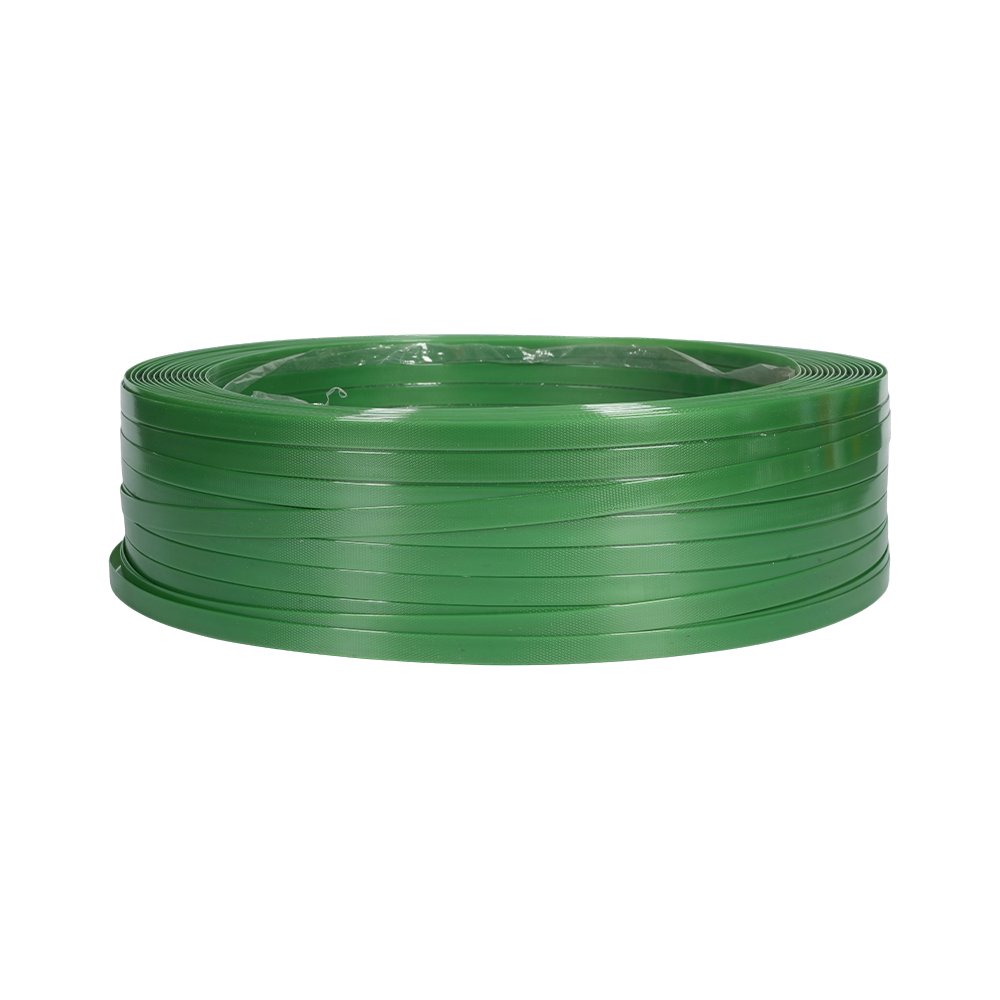
PET plastic steel belt is a strapping material manufactured from virgin or recycled PET resin through a process of extrusion, stretching, and heat-setting. The resulting strap exhibits high tensile strength (typically 4000–6000 N for a 16 mm × 0.8 mm cross-section), low elongation at break (2–5%), and excellent impact resistance. Unlike steel, it does not rust or dent; unlike PP, it does not relax under constant tension. Because PET is 100% recyclable, the belt also supports circular economy goals in packaging.
Performance Comparison: PET vs. Steel vs. PP
The most direct way to understand PET plastic steel belt is to compare it against the two most common alternatives across parameters that matter in warehouse and shipping environments.
| Property | PET Plastic Steel Belt | Steel Strap | Polypropylene Strap |
| Tensile strength (16×0.8 mm) | 5000 N | 7000 N | 2500 N |
| Elongation at break | 4% | 2% | 18% |
| Weight per 100 m (16×0.8 mm) | 1.6 kg | 3.9 kg | 1.1 kg |
| Corrosion resistance | Excellent | Poor | Good |
| Edge safety | No sharp edges | Sharp edges | Soft edges |
| Recyclability | 100% (PET) | 100% (metal) | Recyclable |
The combination of high strength and low weight makes PET plastic steel belt particularly attractive for export shipments where container weight limits are critical.
Where PET Plastic Steel Belt Excels
PET plastic steel belt is not a universal replacement for every strapping job, but it dominates in two specific scenarios: heavy palletizing and long product bundling. The following comparison grid highlights the differences.
Heavy Palletizing
- Steel replacement for loads over 500 kg
- Eliminates rust stains on cardboard and products
- Compatible with automatic strapping machines
- Typical strap: 12–16 mm width, 0.6–0.8 mm thickness
Long Product Bundling
- Metal profiles, lumber, pipes, and steel coils
- High impact resistance prevents breakage during handling
- No edge cutting, reducing worker injury
- Typical strap: 16–19 mm width, 0.8–1.0 mm thickness
How to Choose the Right PET Strapping
Selection depends on four variables: load weight, package edge profile, tensioning method, and environmental exposure. Use the following list as a quick reference, then verify with the manufacturer's specifications.
- Identify the load weight — straps must retain at least 80% of initial tension after 24 hours. For loads above 1 ton, use 19 mm × 1.0 mm PET.
- Check edge protection — even though PET has no sharp edges, corner protectors are recommended for loads with sharp metal edges.
- Choose between manual and machine grade — handheld straps (like the 1608, 1610 series) are tensioned manually; machine grade should be ordered for automated strapping lines.
- Consider recycled content — many PET straps contain 30–100% post-consumer recycled PET without sacrificing performance.
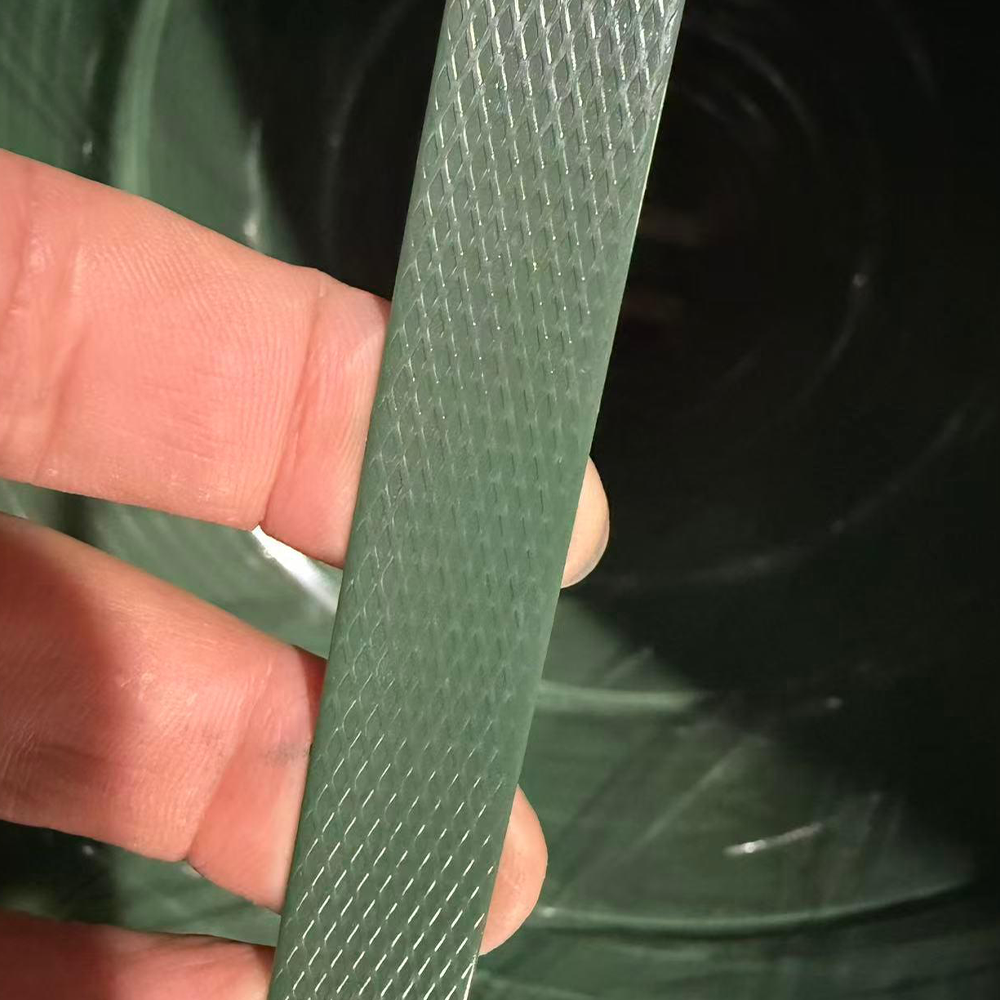 Opaque PET Hand Strapping for General Warehousing and LogisticsThis opaque PET strapping provides reliable tensile strength and weather resistance for horizontal bundling tasks like pallet unitizing and coil wrapping, making it a practical choice for most warehouse and logistics applications.View Product →
 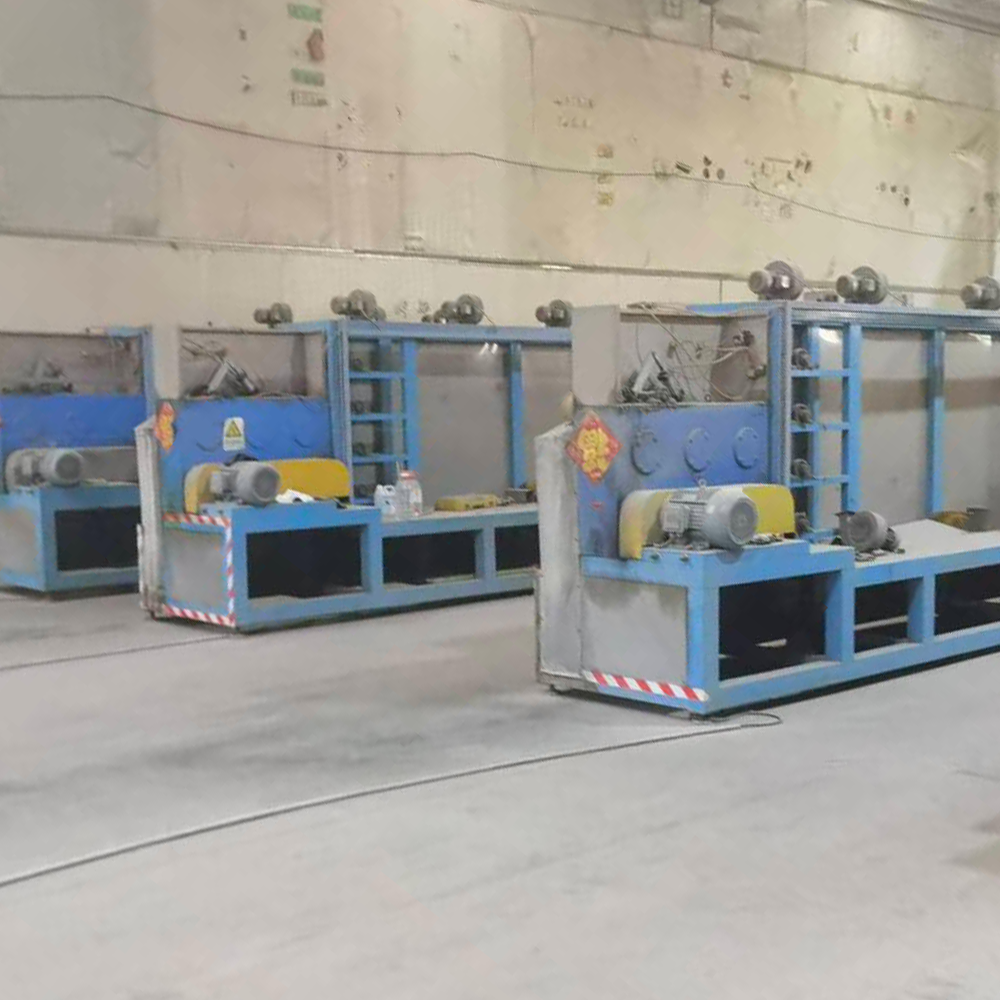 Transparent PET Strapping for Light-to-Medium Duty BundlingWith its transparent design and balanced strength-toughness, this PET strapping is ideal for securing cartons, textiles, and printed matter while allowing easy label identification through the strap.View Product →
Frequently Asked Questions
Can PET plastic steel belt completely replace steel strapping?
In most horizontal strapping applications (pallet unitizing, bundling, and coil wrapping), yes. The main exception is vertical strapping of Very heavy loads that require steel's higher stiffness to prevent strap loosening during lifting. For these cases, hybrid solutions (steel + PET) are sometimes used.
How does temperature affect PET plastic steel belt performance?
PET retains about 90% of its rated strength between −20 °C and +60 °C. Above 70 °C, creep becomes more pronounced; above 100 °C, permanent deformation can occur. For hot-climate warehouses or near-furnace applications, check the supplier's heat stability data.
Is PET plastic steel belt recyclable after use?
Yes. PET strapping is made from the same resin as beverage bottles. Most recycling streams accept it, and some suppliers offer take-back programs for used straps. Recycling reduces landfill waste and lowers the carbon footprint of packaging operations.
What is the typical elongation of PET strapping, and why does it matter?
PET strapping elongates 2–5% at break. Higher elongation allows the strap to absorb shock during transit without snapping, while lower elongation ensures minimal load relaxation over time. The sweet spot for general bundling is 3–4% elongation.
LATEST POST
Let’s create something amazing together
contact us
CONTACT DETAILS
- Address:No. 241, Yaojiafan, Zhangpanqiao, Shushan Street, Xiaoshan District, Hangzhou City, Zhejiang Province, China
- TEL:+86-0571-83175630
- Phone:+86-13336160217
- Email:[email protected]
- WeChat/WhatsApp:+86-18058115265
PRODUCTS
NEWS CENTER
MOBILE TERMINAL
Copyright© Zhejiang Geruite Packaging Materials Co., Ltd. All Rights Reserved.
Privacy Wholesale industrial packaging tape Manufacturers