-
 +86-0571-83175630
-
 [email protected]

 English
  Español
  عربى
عربى 
MS Polymer Adhesive on PC/ABS: Why Bonds Fail and Fixes
Content
Silane-modified polyether, commonly called MS polymer adhesive, is a moisture-curing elastomer built on a flexible polyether backbone capped with reactive silane groups. It bonds glass and metal with ease, often achieving cohesive failure without a primer, yet the same formulation frequently underperforms on PC, ABS, and PC/ABS blends despite these plastics carrying polar functional groups.
Why MS Polymer Adhesive Grips Glass and Metal So Well
Two mechanisms explain the strong performance on glass and metal, and understanding them is the key to understanding the PC/ABS shortfall.
High Surface Energy Enables Wetting
Glass carries a surface energy around 60 to 70 mJ/m2 and anodized aluminum around 45 to 60 mJ/m2, both well above the surface tension of MS polymer adhesive. Wetting thermodynamics dictates that when adhesive surface tension is lower than a substrate's critical surface tension, the adhesive spreads fully and achieves molecular-level contact, the precondition for real adhesion.
Reactive Sites Build Covalent Bonds
Glass surfaces are rich in silanol groups (Si-OH) and metal surfaces carry a hydrated oxide layer with abundant hydroxyls. The silane end groups of MS polymer adhesive hydrolyze during cure into silanol groups that form strong hydrogen bonds with these surface hydroxyls, then condense further into covalent Si-O-M bonds. This combination of physical anchoring and chemical bonding is what delivers durable adhesion.
Why PC/ABS Resists the Same Chemistry
PC and ABS are not classic low-surface-energy plastics like polypropylene, yet MS polymer adhesive still bonds them poorly. Four interface-level factors explain why.
Steric Hindrance in PC's Polar Groups
Standard bisphenol-A polycarbonate contains polar carbonate groups (-O-CO-O-), but they sit embedded within a rigid aromatic backbone. Unlike the freely exposed silanol groups on glass, PC's carbonate groups are shielded by bulky benzene rings and isopropylidene structures, making it hard for them to form an effective hydrogen-bond network with the silanol groups in MS polymer adhesive.
Non-Polar Domains in ABS
ABS is a three-monomer copolymer of acrylonitrile, butadiene, and styrene. The butadiene phase gives ABS its impact toughness but is itself non-polar rubber that migrates toward the surface and lowers overall surface energy, while the styrene component is only weakly polar. Together they create uneven surface chemistry, so adhesive wetting and bonding behavior varies from spot to spot on the same part.
No Sites for Condensation Reactions
Reliable bonding to MS polymer adhesive depends on covalent bond formation, the way glass and metal hydroxyls condense with silanol groups. PC/ABS surfaces lack equivalent reactive sites; PC's carbonate group can interact weakly with silane, but not enough to form a stable chemical crosslink.
Surface Contamination From Molding
PC/ABS parts are typically injection molded, and mold-release agents and lubricants migrate to the part surface during processing, forming an ultra-thin contamination layer. This layer lowers surface energy and blocks direct contact between the adhesive and the bulk substrate, further weakening bond strength.
How Sika's Patents Address the Gap
Leading international adhesive makers have spent years developing patented fixes for MS polymer adhesive on engineering plastics. Two Sika patents illustrate the current state of the art.
| Patent | Core Approach | Key Detail |
| EP 3684872B1 | Dual aminosilane plus polymeric plasticizer | Monomeric/oligomeric aminosilane S1 (4.5 to 14.5 percent nitrogen) and oligomeric aminosilane S2 (15 to 20 percent nitrogen), each at 0.5 to 2.5 percent of the formulation, alongside 15 to 35 percent polymeric plasticizer |
| US 9708517 | Ethoxy mercaptosilane for primerless bonding | 3-mercaptopropyltriethoxysilane paired with titanate, zirconate, or aluminate catalysts such as tetrabutyl titanate, plus a guanidine or imidazole base promoter |
Adding just 1 percent 3-mercaptopropyltriethoxysilane with a Tyzor IBAY titanate catalyst measurably raised bond strength on plastics like PVC, and the improvement held up through humid-heat aging and boiling-water exposure.
In the EP 3684872B1 formulation, the amino functional groups of aminosilanes S1 and S2 bond chemically to the substrate surface through separate reaction pathways, while their alkoxy groups co-react with the end silane groups of the MS polymer backbone during cure, chemically anchoring the adhesive to the substrate. The polymeric plasticizer, a high-molecular-weight liquid polymer rather than a small-molecule additive, improves flexibility and cohesion while also adjusting wetting behavior on hard-to-bond substrates and promoting interfacial interdiffusion between the adhesive chains and the plastic. The same formulation performs well beyond ABS, extending to polyolefins such as PP and PE, EPDM rubber, PMMA, and PVDF coatings.
In the US 9708517 approach, the thiol group (-SH) in ethoxy mercaptosilane is highly reactive and has a strong affinity for both metal and plastic surfaces, forming a tough chemical bridge between adhesive and substrate. The catalyst accelerates silane hydrolysis and condensation, while the basic promoter further drives the interfacial reaction forward.
The Resin-Level Fix: Domestic MS Resin From Nanjing Tsingqi
Both silane-based patent routes rely on costly silane coupling agents, which raise MS polymer adhesive cost and still leave a performance ceiling. The more fundamental fix is to modify the MS resin itself. Japan's Kaneka, a major MS resin producer, blends base MS resin with acrylic-modified MS resin from its MA series hybrid silane resins; the acrylic segments introduce carbonyl and ester polar units that raise intermolecular attraction with PC/ABS's own polar groups, improving interfacial affinity at the resin source.
High-end MS resin has long been dominated by international players like Kaneka and Germany's Wacker Chemie, keeping prices high and leaving Chinese adhesive manufacturers exposed to supply-chain risk during periods of global instability.
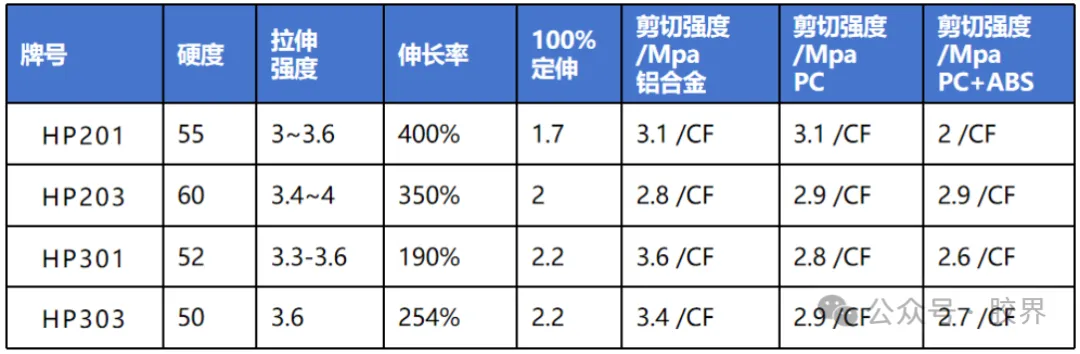
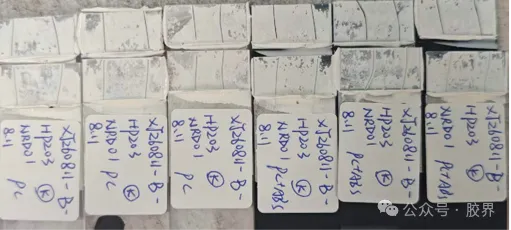
Nanjing Tsingqi New Materials Technology Co., Ltd has built its own MS resin platform, the TSINGO series, and recently launched a new HP series resin specifically engineered for strong adhesion to PC, ABS, and PC/ABS substrates for China's fast-growing automotive market. Test panels using this resin showed cohesive failure (CF), the same failure mode associated with the strong bonds MS polymer adhesive achieves on glass and metal.
Nanjing Tsingqi New Materials will present its TSINGO SMP silane-modified polyether resin series at the Shanghai International Adhesive and Sealant Exhibition from September 15 to 17, 2026, where visitors can learn more about the resin line and request free samples.

What This Means for Formulators
The difficulty bonding MS polymer adhesive to PC/ABS comes down to three interacting factors in interface science: wettability, chemical compatibility, and interfacial reactivity. Additive-based patent routes using aminosilanes or mercaptosilanes can close part of the gap, but resin-level modification addresses the compatibility problem at its source. Choosing a capable domestic MS resin is both a way past the performance ceiling and a step toward more secure, self-reliant supply chains.
Can MS polymer adhesive bond PC/ABS without any primer?
Standard MS polymer adhesive generally cannot achieve reliable long-term adhesion to PC/ABS without help. Primerless performance requires formulation changes, such as the mercaptosilane and catalyst system in US Patent 9708517, or a resin engineered for these substrates.
Is ABS harder to bond than PC for MS polymer adhesive?
Both are difficult but for different reasons. PC's polar carbonate groups are sterically shielded within a rigid aromatic backbone, while ABS's surface chemistry is uneven because its non-polar butadiene phase migrates toward the surface.
Why do polymeric plasticizers help MS polymer adhesive bond difficult plastics?
Unlike small-molecule plasticizers, high-molecular-weight polymeric plasticizers adjust the adhesive's wetting behavior on low-affinity surfaces and promote interdiffusion between the adhesive chains and the plastic substrate, strengthening interfacial bonding rather than just softening the cured adhesive.
Why does injection molding make PC/ABS harder to bond?
Mold-release agents and lubricants used in injection molding migrate to the part surface, forming a thin contamination layer that lowers surface energy and blocks direct contact between the adhesive and the substrate.
CONTACT DETAILS
- Address:No. 241, Yaojiafan, Zhangpanqiao, Shushan Street, Xiaoshan District, Hangzhou City, Zhejiang Province, China
- TEL:+86-0571-83175630
- Phone:+86-13336160217
- Email:[email protected]
- WeChat/WhatsApp:+86-18058115265
PRODUCTS
NEWS CENTER
MOBILE TERMINAL
Copyright© Zhejiang Geruite Packaging Materials Co., Ltd. All Rights Reserved.
Privacy Wholesale industrial packaging tape Manufacturers