-
 +86-0571-83175630
-
 [email protected]

 English
  Español
  عربى
عربى 
Fiberglass Adhesive Tape: Benefits, Applications, and Selection Guide
Content
- 1 Fiberglass Adhesive Tape: Benefits, Applications, and How to Choose It
- 2 Fiberglass Adhesive Tape Benefits
- 3 Fiberglass Adhesive Tape vs. Cloth Tape
- 4 Fiberglass Adhesive Tape vs. Filament Tape
- 5 Heat Resistant Fiberglass Adhesive Tape
- 6 Fiberglass Adhesive Tape Applications and Uses
- 7 Fiberglass Mesh Tape for Drywall and Wall Repair
- 8 Fiberglass Tape Selection Guide
Fiberglass Adhesive Tape: Benefits, Applications, and How to Choose It
Fiberglass adhesive tape combines a woven fiberglass backing with a pressure sensitive adhesive, giving it a strength-to-weight ratio and heat resistance that standard cloth or filament tapes can't match. This guide covers where fiberglass tape outperforms alternative tapes, its main use cases, and how to select the right type for your application.
Fiberglass Adhesive Tape Benefits
The woven fiberglass backing gives the tape structural reinforcement that cloth and paper-backed tapes lack, while remaining flexible enough to conform to curved or irregular surfaces. This combination is why fiberglass adhesive tape shows up in applications ranging from drywall repair to high-temperature pipe insulation.
Fiberglass Adhesive Tape vs. Cloth Tape
| Factor | Fiberglass Adhesive Tape | Cloth Tape |
|---|---|---|
| Tensile strength | Higher, resists tearing under tension | Lower, more prone to tearing |
| Heat resistance | Good to excellent depending on adhesive | Limited, adhesive typically softens sooner |
| Dimensional stability | Minimal stretch or shrink over time | Can stretch or loosen with age |
| Typical use case | Structural reinforcement, high-temp sealing | General-purpose bundling, light repairs |
Comparison of fiberglass adhesive tape and standard cloth tape.
Fiberglass Adhesive Tape vs. Filament Tape
Key Distinction
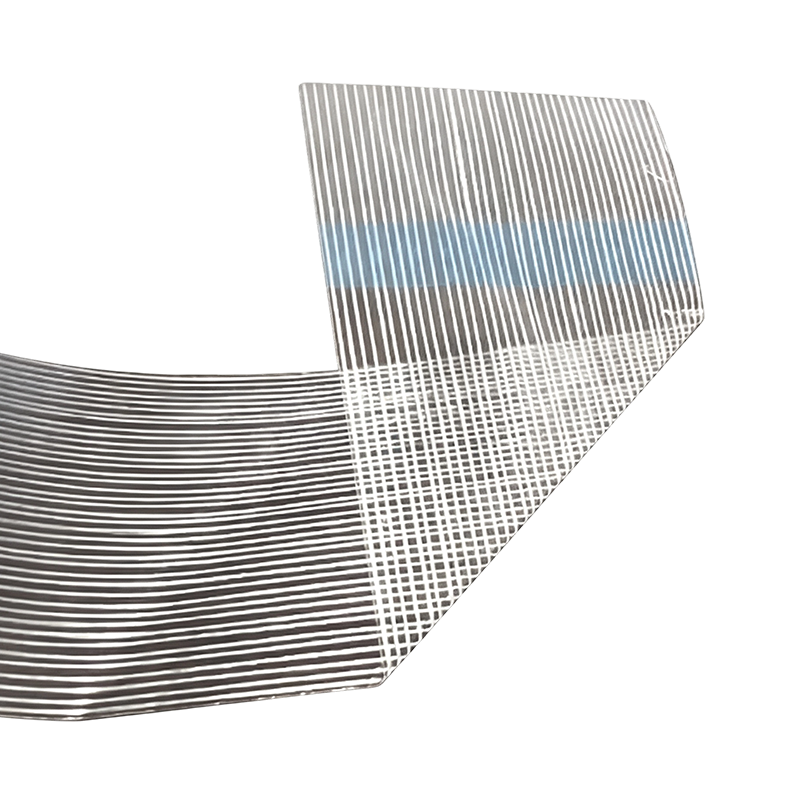
Filament tape reinforces the backing with straight, unidirectional glass or polyester filaments, which gives excellent tensile strength along the length of the tape but limited resistance to tearing across its width. Fiberglass adhesive tape typically uses a woven fiberglass cloth, distributing strength in both directions and giving it better resistance to tearing, puncture, and abrasion from multiple angles.
In practice, filament tape is chosen for straight-line bundling and palletizing where load is applied in one direction, while woven fiberglass tape is chosen where the tape itself needs to hold its shape and resist damage under multidirectional stress, such as wrapping insulation or reinforcing a repair patch.
Heat Resistant Fiberglass Adhesive Tape
High temperature fiberglass tape pairs a fiberglass cloth backing with a silicone or other heat-stable adhesive, allowing it to maintain adhesion and structural integrity in environments that would degrade standard acrylic or rubber-based tapes. This makes it a common choice for wrapping pipes, ducts, and equipment that operate at sustained elevated temperatures, as well as for temporary masking during high-heat processes such as powder coating or welding.
Fiberglass Adhesive Tape Applications and Uses
Drywall & Wall Repair
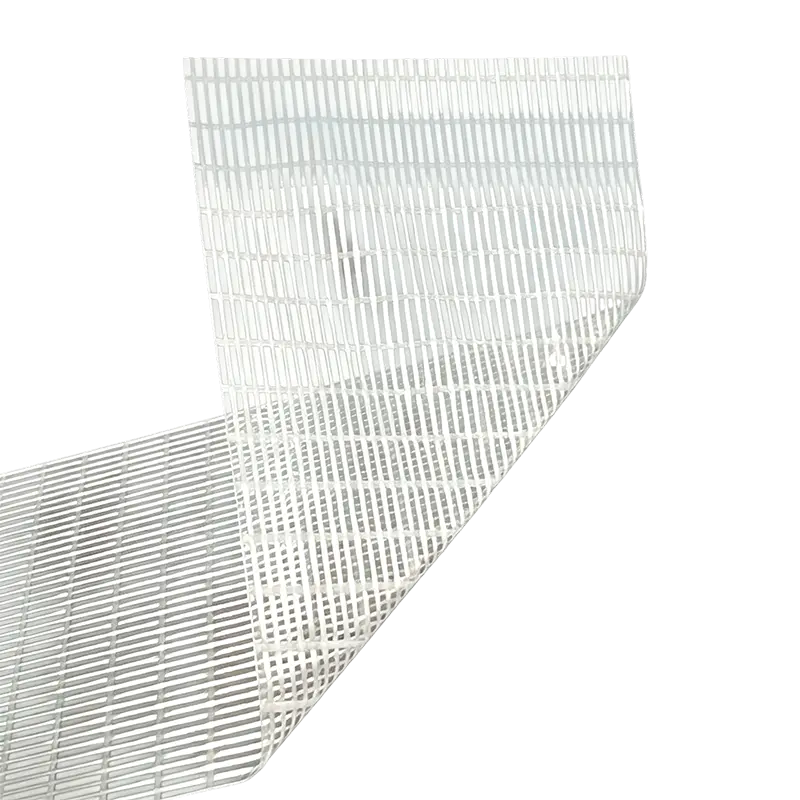
Self adhesive fiberglass mesh tape reinforces drywall seams and patches, resisting cracking as the wall settles.
Pipe Insulation
Wraps and seals insulation jacketing on hot and cold pipe runs, holding up to repeated thermal cycling.
Composite Repair
Reinforces patch repairs on fiberglass and composite panels, adding structural strength to the bonded area.
Electrical Applications
Electrical fiberglass tape provides insulation and mechanical protection for wiring harnesses and coil wrapping.
Beyond these core uses, industrial fiberglass adhesive tape is also used for general insulation jacketing, duct sealing, and as a reinforcing layer in gasket and sealing applications where standard tape would tear or stretch under mechanical load.
Fiberglass Mesh Tape for Drywall and Wall Repair
Fiberglass mesh tape — an open-weave, self adhesive fiberglass tape — is the standard reinforcement for drywall joint and crack repair. Its open mesh structure allows joint compound to key through the tape for a stronger mechanical bond than paper tape, while the self-adhesive backing holds it in place during application without additional fasteners or wet-taping steps.
Fiberglass Tape Selection Guide
How to Choose Fiberglass Adhesive Tape
- Backing weave: woven cloth for multidirectional strength, open mesh for repair applications needing compound adhesion.
- Adhesive type: silicone or high-temperature adhesive for sustained heat exposure; standard acrylic for general-purpose use.
- Tensile strength requirement: match tape grade to the mechanical load the application will place on the bonded or wrapped surface.
- Operating temperature range: confirm both the fiberglass backing and the adhesive are rated for the expected temperature.
- Surface type: flat, curved, or irregular surfaces may favor different tape thickness and flexibility.
Working through backing type, adhesive chemistry, and the mechanical or thermal demands of the application is what separates a fiberglass reinforced adhesive tape that holds up long-term from one that fails prematurely under stress or heat.
LATEST POST
Let’s create something amazing together
contact us
CONTACT DETAILS
- Address:No. 241, Yaojiafan, Zhangpanqiao, Shushan Street, Xiaoshan District, Hangzhou City, Zhejiang Province, China
- TEL:+86-0571-83175630
- Phone:+86-13336160217
- Email:[email protected]
- WeChat/WhatsApp:+86-18058115265
PRODUCTS
NEWS CENTER
MOBILE TERMINAL
Copyright© Zhejiang Geruite Packaging Materials Co., Ltd. All Rights Reserved.
Privacy Wholesale industrial packaging tape Manufacturers