-
 +86-0571-83175630
-
 [email protected]

 English
 Español
 عربى

High Temperature PET Tape: Heat Ratings, Applications, Selection Guide
Content
- 1 What High Temperature PET Tape Is Made Of and Why the Construction Matters
- 2 Temperature Ratings on High Temperature PET Tape: What the Numbers Mean
- 3 Where High Temperature PET Tape Gets Specified: Reflow, Batteries, Transformers, and Powder Coating
- 4 Choosing the Right Grade: Backing Thickness, Adhesion, and Elongation
- 5 Sourcing High Temperature PET Tape: Consistency, Tolerances, and Supplier Checks
- 6 Frequently Asked Questions
What High Temperature PET Tape Is Made Of and Why the Construction Matters
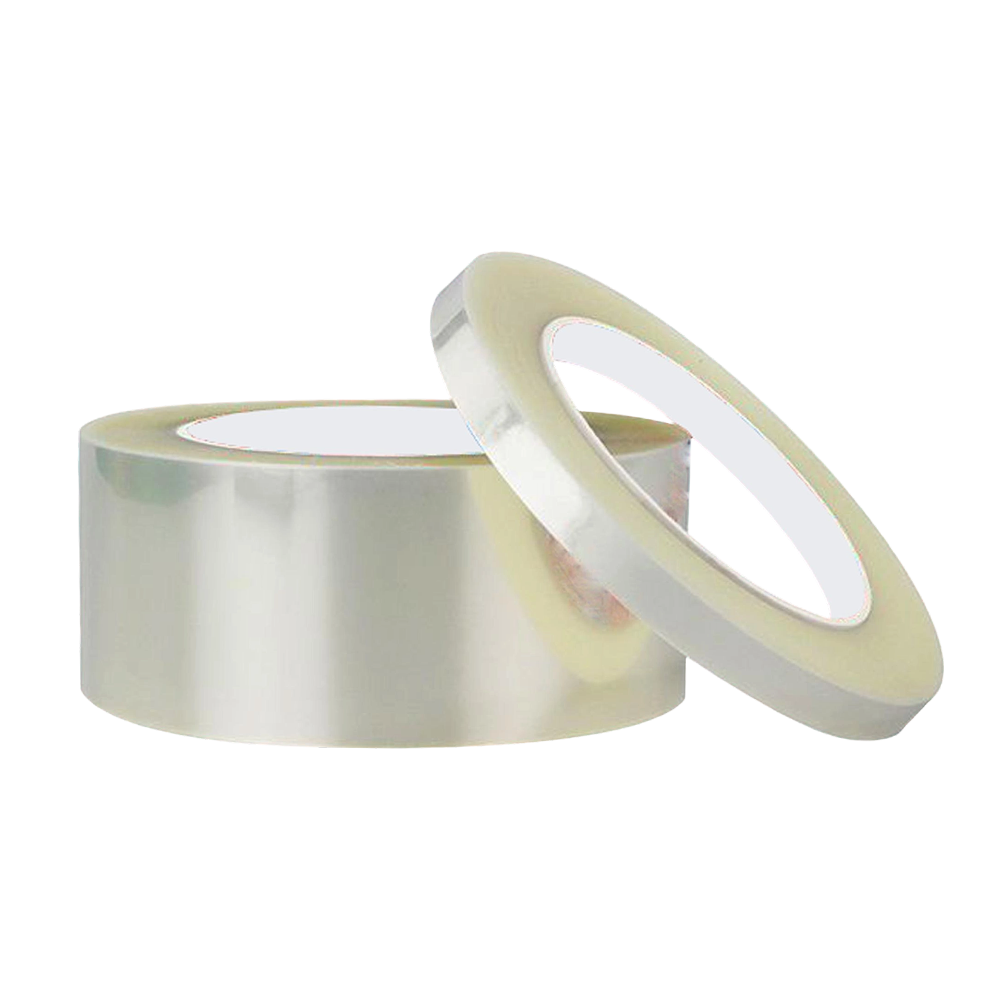
High temperature PET tape is a single-sided tape with a biaxially oriented PET film backing and a silicone adhesive layer. The PET film provides dimensional stability, tensile strength, and electrical insulation; the silicone adhesive keeps the bond intact at elevated temperatures and removes without the sticky residue that acrylic adhesives leave after a heat cycle, which places it among the residue-free tape families used in electronics.
Three properties drive most specification decisions:
- Dielectric strength: a typical 0.025 mm PET backing withstands several kilovolts, which is why the tape appears in transformer and coil wrapping.
- Solvent resistance: PET film does not swell or degrade in common cleaning solvents, so the tape stays in place during degreasing steps.
- Edge quality: PET is stiffer than crepe paper, and that stiffness produces straight tear lines and clean slit edges, which matters for automated applicators.
Continuous heat resistance is the maximum temperature at which a tape can be held for a long period, commonly 1,000 hours or more in accelerated ageing tests, without losing a defined percentage of its original adhesion. Short-term heat resistance is the temperature a tape survives for a fixed window, usually 30 to 60 minutes, in a convection oven.
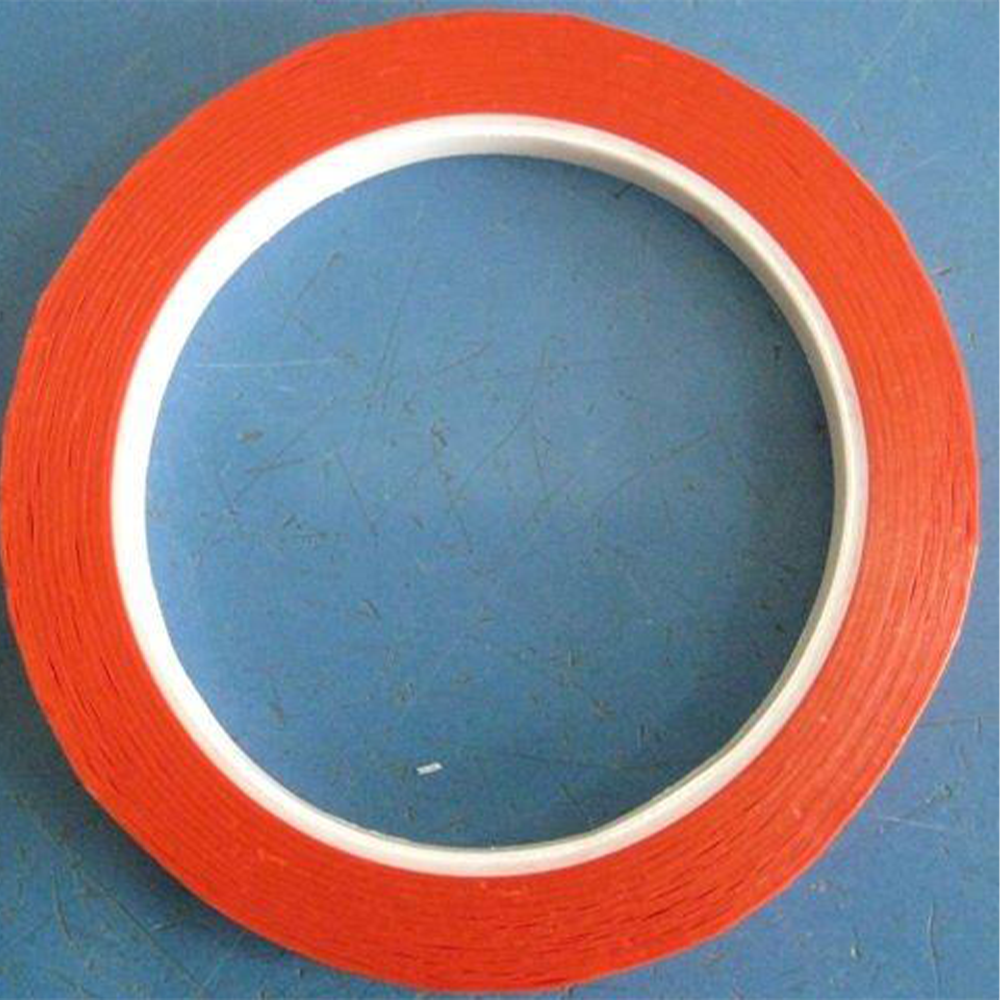 LY-XX Mylar Tape for Electrical Insulation and Coil WrappingThis polyester film tape offers stable insulation with UL recognition, suitable for coil wrapping and battery pack fixation where reliable short-term reflow or bake resistance is required.View Product →
Temperature Ratings on High Temperature PET Tape: What the Numbers Mean
A rating of 200°C on a high temperature PET tape data sheet describes a short-term heat exposure, typically 30 to 60 minutes in a convection oven, not continuous service. For continuous operation, most PET tape grades are specified at 150°C to 180°C. The short-term figure is what you can rely on during a reflow spike, a powder coating cure, or a varnish bake.
If your process holds parts above 180°C for hours, confirm the adhesive system with the supplier. Silicone is the standard chemistry, but cure levels vary between manufacturers and directly affect the upper limit and the residue profile.
Rule of thumb: run PET tape no higher than 20 to 30°C below its short-term rating when the heat cycle repeats every shift.
Where High Temperature PET Tape Gets Specified: Reflow, Batteries, Transformers, and Powder Coating
Four production environments account for most high temperature PET tape demand: PCB assembly, battery cell manufacturing, transformer and coil winding, and powder coating lines. Each environment stresses a different combination of heat tolerance, insulation, or clean removal.
- PCB assembly: PET tape masks gold fingers and edge connectors through wave soldering and milder reflow profiles. When the masked area itself approaches 220°C for more than a few seconds, polyimide is the standard substitution.
- Battery cell assembly: insulating aluminum tabs on pouch cells requires a film that tolerates tab welding heat and does not outgas or shift during electrolyte filling. The silicone adhesive also survives the solvents used in some filling lines.
- Transformer and coil winding: the dielectric strength of PET film makes it a practical layer insulation for bobbin-wound transformers and small coils in class B duty.
- Powder coating masking: threaded holes, grounding points, and machined surfaces are masked before the part enters a 180 to 200°C curing oven. The tape must hold through the full thermal cycle and strip off in one piece.
In PCB masking, the combination of polyester backing and silicone adhesive is the reason gold finger protection survives flux chemicals and reflow heat, while crepe tape shrinks or leaves adhesive behind.
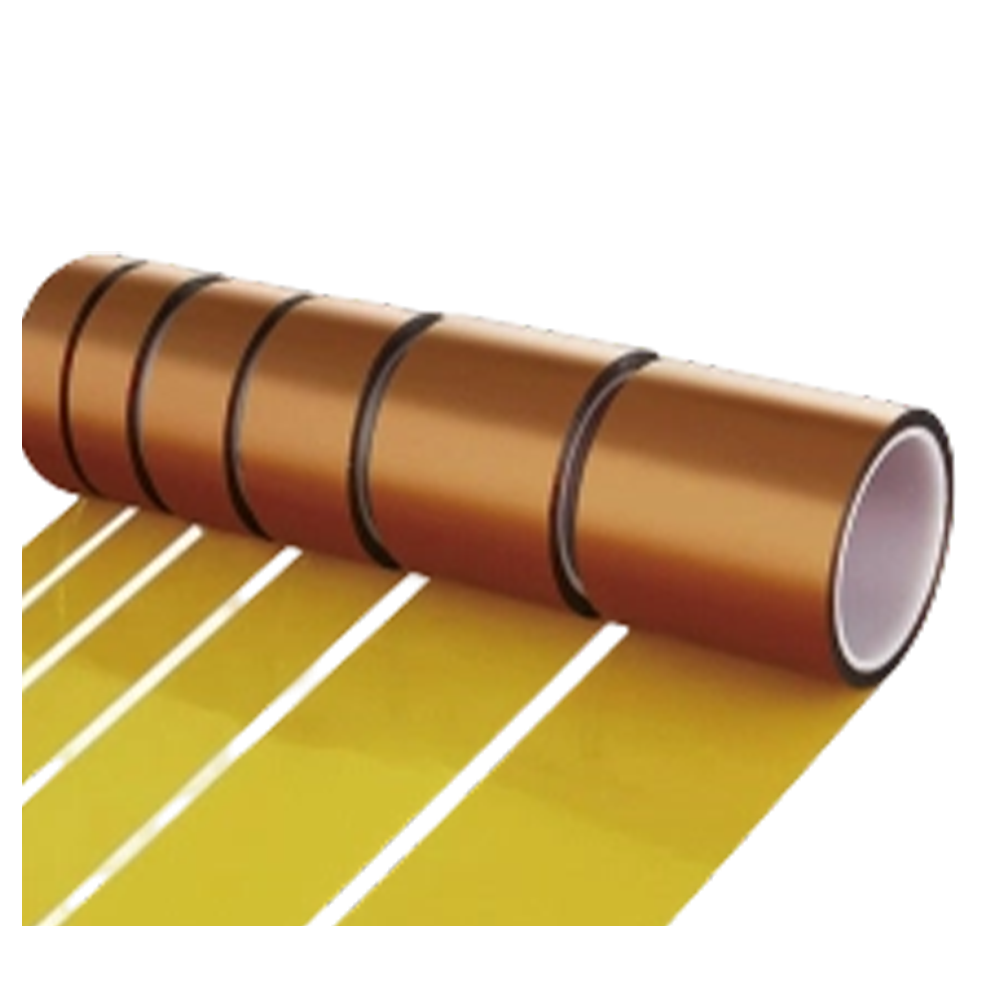 PI Gold Finger Tape for PCB Masking and High-Temperature ProtectionA silicone-adhesive polyimide tape that withstands reflow heat and flux chemicals, making it the dependable choice for gold finger masking and other demanding electronic assembly processes.View Product →
Choosing the Right Grade: Backing Thickness, Adhesion, and Elongation
Once the thermal profile of your process is confirmed, the selection decision narrows to backing thickness, adhesive coat weight, and elongation at break.
Thin 0.025 mm backing conforms to curved surfaces and wraps around small components; a 0.050 mm grade resists punctures and increases dielectric strength but does not follow tight radii as easily. Adhesion for high temperature PET tape typically runs 4.5 to 6.5 N/25 mm on steel, deliberately moderate, because the tape only needs to stay put through a heat cycle and then release cleanly.
Choose PET tape when
- Process peaks stay between 180 and 200°C
- Dielectric insulation is required
- Residue-free removal is critical
- Budget matters against PI per square meter
Move to PI tape when
- Peak temperature exceeds 230°C
- The masked area sees direct molten solder
- Solder wicking along film edges is a defect
- Multiple full reflow passes are required
| Property | PET tape | PI tape | Crepe masking tape |
| Short-term heat resistance | 200°C | 260°C+ | 120°C |
| Continuous service | 150-180°C | 240°C | 80-100°C |
| Dielectric strength | High | Very high | Low |
| Residue on removal | Low | Low | Moderate |
| Relative cost | Mid | High | Low |
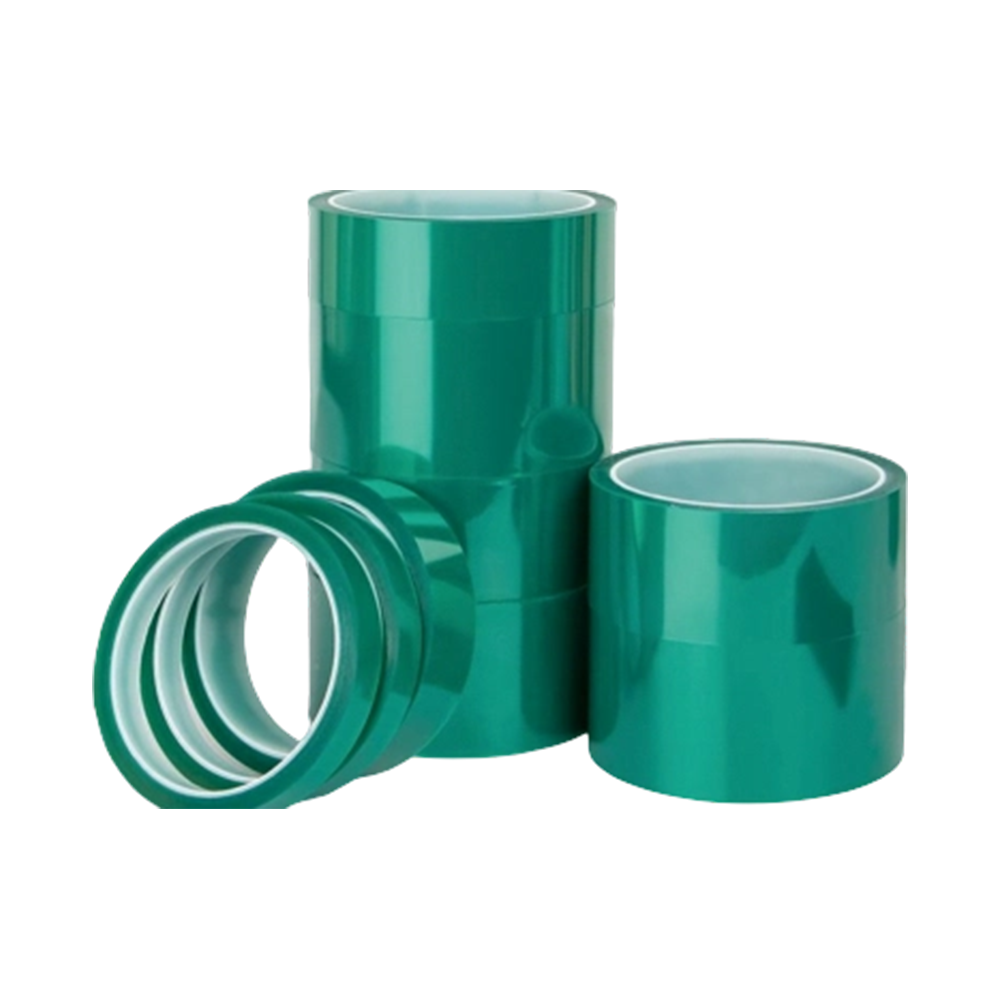
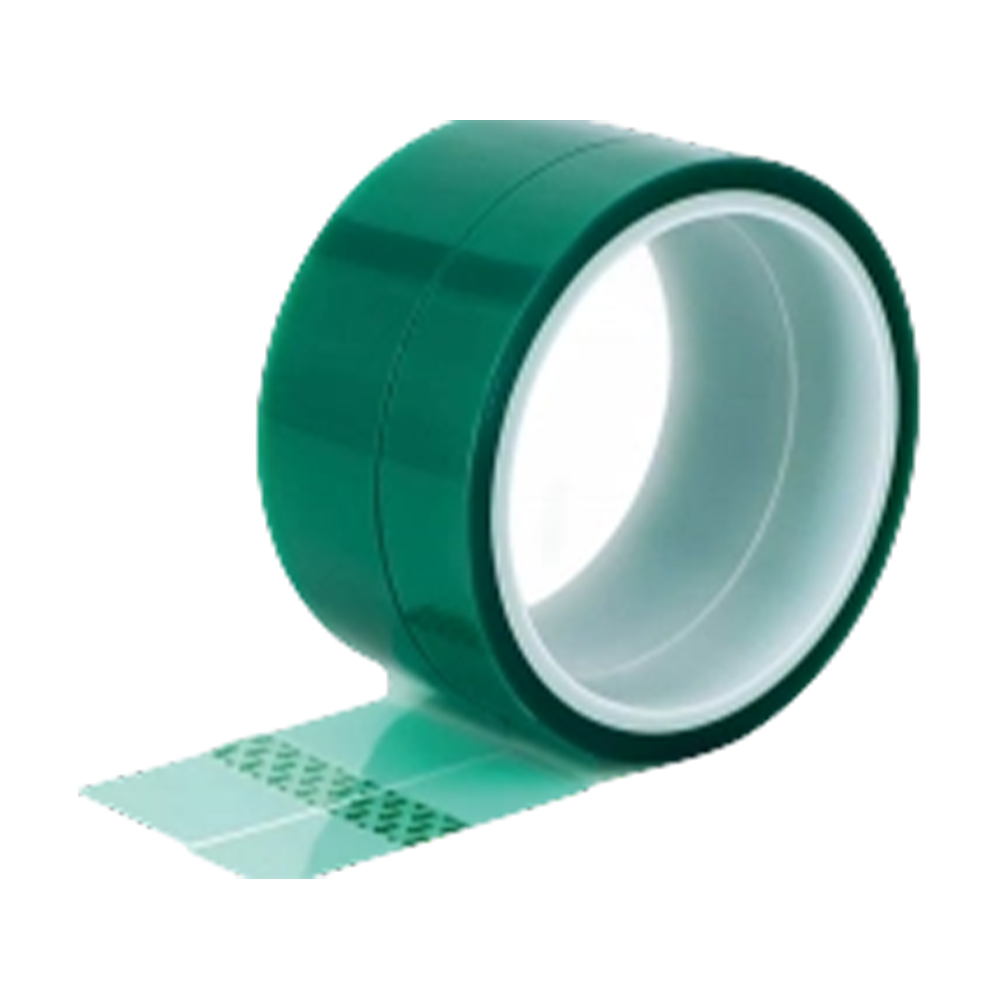 PET High-Temperature Tape with Thin and Standard Thickness OptionsThis tape balances conformability and dielectric strength, with moderate adhesion for clean release after heat exposure—key for masking applications that demand consistent performance across batches.View Product →
Sourcing High Temperature PET Tape: Consistency, Tolerances, and Supplier Checks
Batch-to-batch consistency is the real specification for volume buyers. A tape that performs perfectly in a 50 m trial can fail across a 100,000 m order if the coating line speed changes, the silicone curing temperature drifts, or the film supplier switches grades.
Ask a potential supplier these four questions before placing a bulk order:
- What is the width tolerance on the master roll and on each slit roll? A common production value is +/-1 mm, while automatic applicators may need +/-0.5 mm.
- What cure level does the silicone adhesive carry? Undercured silicone outgasses at temperature and leaves micro-residue.
- What storage life is documented? Most PET tape stores 12 months below 30°C and 50-70% relative humidity, away from direct UV.
- Can the factory provide batch test records for film thickness, adhesion, and heat resistance?
Suppliers such as Zhejiang Geruite Packaging Materials Co., Ltd. document film thickness, adhesive type, and batch adhesion values for their PET high-temperature tape lines, which is the level of traceability a repeatable masking process depends on.
Ask the supplier to confirm film thickness tolerance and the adhesion batch history for the exact grade you are buying. For reflow applications, run a test roll through your actual thermal profile before committing to bulk volume.
Frequently Asked Questions
Bottom line: match the tape's short-term rating to the peak temperature of your process, subtract 20 to 30°C for continuous exposure, and verify residue behavior with a real oven trial before bulk buying.
Can high temperature PET tape replace polyimide tape in all reflow applications?
No. PET tape works when the reflow peak stays around 200 to 220°C and the masked area is not directly wetted by molten solder. If peaks exceed 230°C, or flux aggressively attacks film edges, polyimide is the safer choice.
Does high temperature PET tape leave residue after removal?
With a properly cured silicone adhesive and removal inside the specified time and temperature envelope, PET tape is designed for clean removal. Residue appears when the tape is overheated for a long period or when an acrylic-coated lookalike labeled "high temperature" is substituted.
What is the difference between a 180°C and a 200°C rating?
The rating indicates the maximum exposure temperature for a defined test window. A 200°C-rated tape survives a 30-minute oven test at 200°C and retains a set percentage of its initial adhesion, while a 180°C-rated grade passes the same test at 180°C. Continuous exposure should stay 20 to 30°C below the short-term rating.
How long can PET tape stay in a curing oven?
It depends on grade and oven temperature. At 150°C, many PET tape grades run for 60 to 90 minutes without significant adhesion loss. At 200°C, keep dwell time to 30 minutes or less, and confirm with a trial that removal remains residue-free in your specific process.
CONTACT DETAILS
- Address:No. 241, Yaojiafan, Zhangpanqiao, Shushan Street, Xiaoshan District, Hangzhou City, Zhejiang Province, China
- TEL:+86-0571-83175630
- Phone:+86-13336160217
- Email:[email protected]
- WeChat/WhatsApp:+86-18058115265
PRODUCTS
NEWS CENTER
MOBILE TERMINAL
Copyright© Zhejiang Geruite Packaging Materials Co., Ltd. All Rights Reserved.
Privacy Wholesale industrial packaging tape Manufacturers