-
 +86-0571-83175630
-
 [email protected]

 English
 Español
 عربى

POF Heat Shrink Film Buying Guide: Properties, Grades, Thickness & Applications
Content
- 1 What is POF heat shrink film and why does it shrink
- 2 POF vs PVC vs PE: the property table that decides the film choice
- 3 Cross-linked or non-cross-linked: sharpen the grade
- 4 POF film thickness: match microns to package weight
- 5 Where POF heat shrink film fits on the packaging line
- 6 Buying POF heat shrink film: what to verify before the order
- 7 Frequently asked questions about POF heat shrink film
A beverage plant that replaced its PVC overwrap with POF heat shrink film cut label distortion, lifted line speed by 18 percent, and pushed scrap below 0.5 percent. That result is why POF, short for polyolefin shrink film, is the default overwrap for food cartons, beverage multipacks, pharmaceutical boxes and gift packaging. POF delivers shelf-ready clarity, seals reliably in a heat tunnel, and avoids the chlorine content that PVC adds to waste. This guide covers what POF heat shrink film is, how it shrinks, which grades and thicknesses fit which products, and what to verify before placing a bulk order.
What is POF heat shrink film and why does it shrink
POF heat shrink film is a multi-layer polyolefin film extruded from polyethylene and polypropylene resins whose molecular chains are stretched during production. When heated above its shrink temperature, the film contracts toward its original unstretched dimensions and forms a tight, uniform skin around the product.
The mechanism is molecular orientation. During extrusion, the film is stretched in both the machine direction (MD) and the transverse direction (TD), then cooled to lock the stretched state in place. When the film enters a heat tunnel set to 130 to 160 degrees Celsius, the chains relax and the film pulls back in both directions at once. Balanced MD and TD shrink rates keep printed graphics and barcodes from distorting.
The shrink process runs in four predictable stages:
- A loose sleeve or bag of POF film is positioned around the product.
- The package moves through a heat tunnel set to the converter's recommended temperature.
- The film contracts in both directions and hugs the product profile.
- The film cools, locks the taut shape, and keeps its gloss for shipment and shelf life.
POF vs PVC vs PE: the property table that decides the film choice
Choosing between POF, PVC and PE shrink film comes down to density, shrink behavior, clarity and sealing range. POF wins on balance; PVC offers lower tunnel temperatures but contains chlorine; PE is tough but hazy at retail clarity.
| Property | POF | PVC | PE |
| Specific gravity | About 0.93 | About 1.40 | About 0.92 |
| Shrink temperature | 130-160 C | 85-140 C | 110-150 C |
| MD shrink ratio | 50-65% | 45-60% | 25-40% |
| Tear resistance | High | Moderate | High |
| Clarity | Excellent | Good | Moderate |
| Chlorine content | None | Yes | None |
| Seal range | Wide | Narrow | Moderate |
Density comparison of common shrink films (g/cm3)
The density gap between POF and PVC means roughly 50 percent more coverage area per kilogram at equal thickness.
Cross-linked or non-cross-linked: sharpen the grade
Every POF grade falls into one of two structural families, and the choice controls how the film survives punctures and heavy items.
Cross-linked POF film
Cross-linked grades are treated with electron-beam or chemical cross-linking so tears stop at the puncture site instead of running across the pack. These films keep their integrity around sharp edges, bottle caps and metal closures. Choose cross-linked for multipacks of cans, hardware kits and gift sets with rigid inserts.
Non-cross-linked POF film
Non-cross-linked grades are softer, less expensive, and elastic enough for light retail goods. They suit stationery, greeting cards, confectionery trays and items without exposed edges. The film tears more easily than cross-linked types, so the package design must avoid sharp protrusions.
Packing engineers apply a simple rule: if a product can break the film before the film seals around it, specify cross-linked POF.
POF film thickness: match microns to package weight
Thickness is the first purchasing specification. POF heat shrink film is produced from about 12 to 50 microns, and the right micron depends on the weight and edge profile of the product.
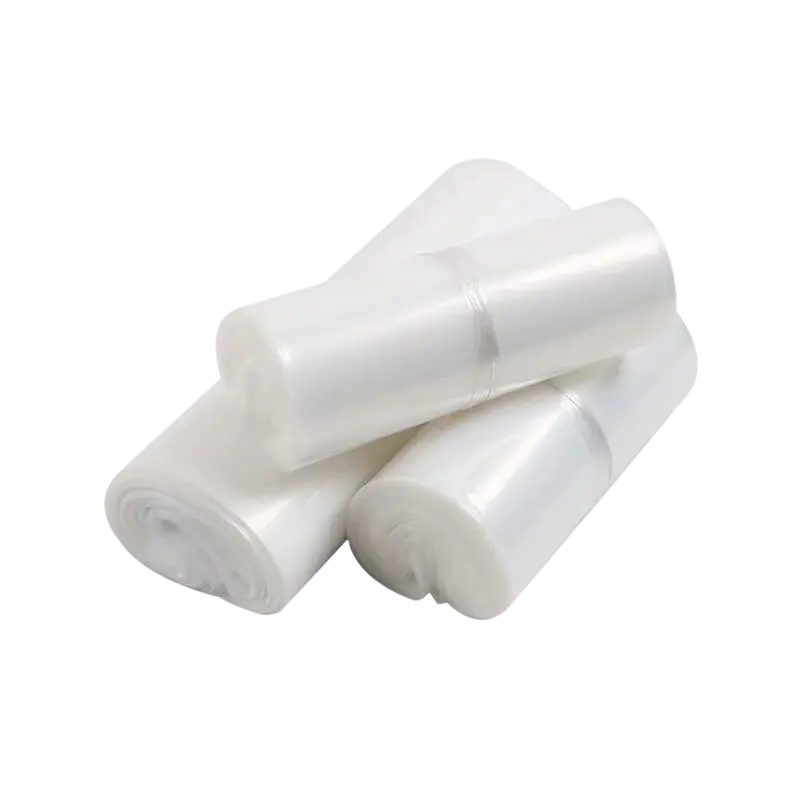
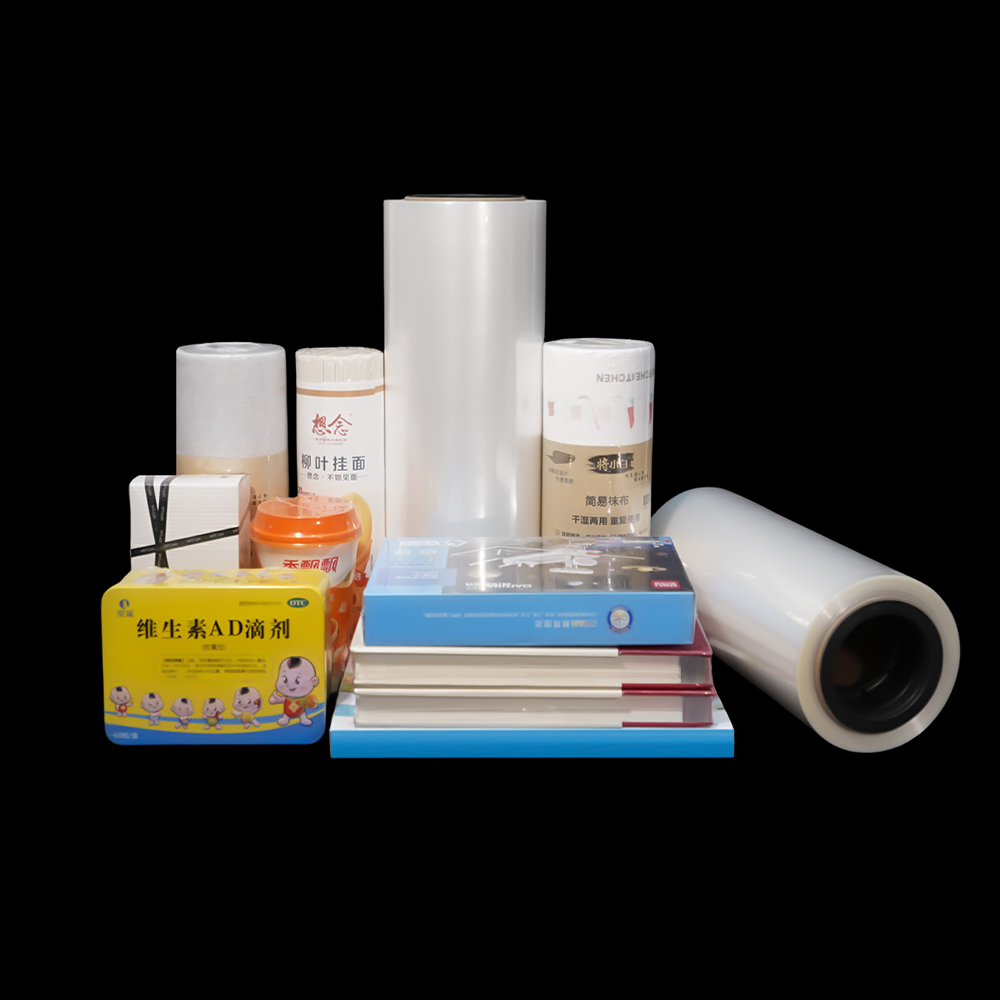 POF Heat Shrink Film in 12 to 50 Micron ThicknessesThis multi-layer polyolefin film offers high transparency and shrinkage, suiting lightweight products under 5 kg. Its broad processing range supports various overwrapping equipment, making it a practical choice for protective display packaging.View Product →
Zhejiang Geruite Packaging Materials Co., Ltd. supplies POF heat shrink film across the 12 to 50 micron range, a practical span that covers most overwrapping jobs below 5 kg per package.
- 12 to 15 micron: light gift wrap, stationery, single cartons under 200 g
- 19 to 25 micron: food cartons, greeting cards, multi-pack confectionery
- 30 to 38 micron: water and beverage multipacks, heavier plastic bottles
- 40 to 50 micron: gift sets with sharp corners, hardware kits, boxed tools
Thickness also sets the heat tunnel conditions. Heavier films absorb more heat and need a longer residence time or a higher tunnel temperature, so verify the target micron before quoting production rates.
Where POF heat shrink film fits on the packaging line
POF overwrap appears wherever a package has to survive transport and still look shelf-ready.
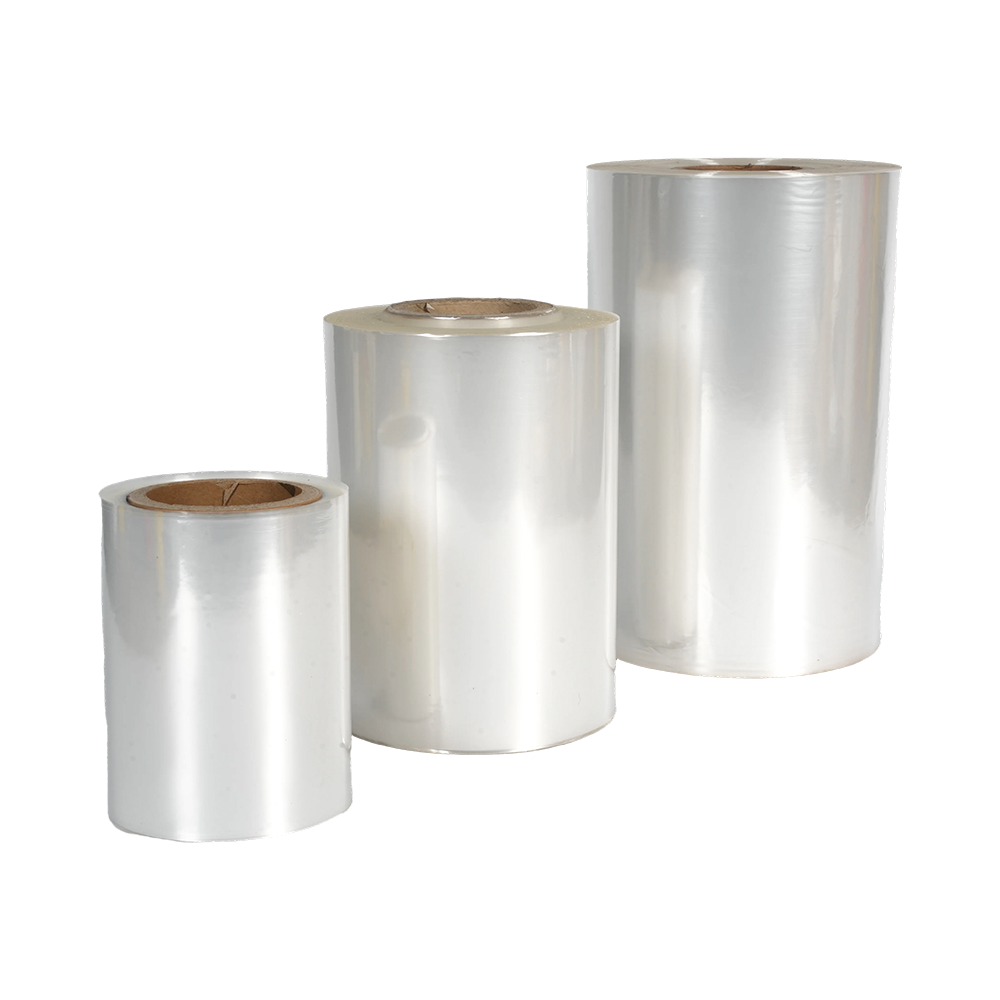 Transparent Shrink Wrap Supplier for Multipack ApplicationsPositioned as a source for clear shrink wrap, this manufacturer supports shelf-ready packaging that endures transport. It serves as a reliable option when evaluating overwrap materials for multipacks and external product protection.View Product →
The main application groups are:
- Food and beverage multipacks: water bottles, soft drink cans, yogurt cups and condiment jars grouped into consumer units.
- Pharmaceuticals and health products: tamper-evident overwrap over printed cartons.
- Stationery, toys and household goods: retail-visible protection that keeps dust and fingerprints off the product.
- Printed promotional packaging: POF accepts flexo and gravure printing, so brand graphics stay aligned after shrink.
The cost logic follows density. Because POF sits at about 0.93 versus about 1.40 for PVC, one kilogram of POF yields around 50 percent more coverage area than the same weight of PVC at equal thickness. The material delta, not the price per kilogram, decides the per-pack cost.
Companies running halogen-free or reduced-waste packaging programs use POF because it contains no chlorine and does not generate the corrosive by-products that PVC emits during heat shrinking. A full review of the alternatives sits in the company's guide to eco-friendly packaging.
Buying POF heat shrink film: what to verify before the order
POF film is a converter product, so the supplier's process control decides your line efficiency. Verify four items on any quotation:
- Shrink ratio data: request MD and TD shrink values measured at your tunnel temperature, not a generic catalog number.
- Seal range: confirm the film's sealing window matches your machine's seal bar temperature and dwell time.
- Food-contact compliance: ask for FDA 21 CFR 177.1520 or equivalent documentation when the package touches food.
- Roll quality: check width tolerance, core inner diameter and splices per roll, because one bad splice stops a wrapping line.
Buyers also need a sourcing reference before comparing prices. The technical guide on polyolefin POF shrink film properties, grades and packaging applications published by Zhejiang Geruite runs through the same selection logic in more depth and is a useful document for supplier briefs.
Converters quote more aggressively on confirmed annual tonnage. A stable 12 to 50 micron spec sheet with your tunnel profile gives the supplier enough detail to lock a consistent grade.
Frequently asked questions about POF heat shrink film
Can POF heat shrink film be used for frozen food?
Yes. POF remains flexible at freezer temperatures down to about -20 degrees C and keeps its seal strength, which makes it suitable for frozen cartons and chilled dairy multipacks. Store the film in a dry area away from direct heat so it stays flat.
Is POF shrink film food safe?
Food-grade POF is formulated to meet FDA 21 CFR 177.1520 for polyolefin food contact. Ask the converter for a compliance statement and specify a food-grade resin when the film touches the product directly.
What is the difference between POF and PVC shrink film?
POF contains no chlorine, weighs about a third less per volume, and offers a wider sealing range with better tear resistance. PVC runs at lower tunnel temperatures but releases corrosive by-products during shrinking and faces tighter regulatory scrutiny in packaging waste.
Which POF thickness should I choose for hand shrink wrapping?
For hand wrapping of light items, 12 to 19 micron POF works well with a handheld heat gun while still giving a neat finish. Heavier products above 1 kg should move to at least 25 micron to prevent tear-through at corners.
LATEST POST
Let’s create something amazing together
contact us

CONTACT DETAILS
- Address:No. 241, Yaojiafan, Zhangpanqiao, Shushan Street, Xiaoshan District, Hangzhou City, Zhejiang Province, China
- TEL:+86-0571-83175630
- Phone:+86-13336160217
- Email:[email protected]
- WeChat/WhatsApp:+86-18058115265
PRODUCTS
NEWS CENTER
MOBILE TERMINAL
Copyright© Zhejiang Geruite Packaging Materials Co., Ltd. All Rights Reserved.
Privacy Wholesale industrial packaging tape Manufacturers