-
 +86-0571-83175630
-
 [email protected]

 English
  Español
  عربى
عربى 
Square-Bottom Plastic Bag Guide: Choosing the Right Fit
Content
- 1 What Makes a Square-Bottom Plastic Bag Different
- 2 Where Square-Bottom Plastic Bags Are Used
- 3 Square-Bottom Plastic Bag vs Flat Plastic Bag
- 4 How to Choose the Right Square-Bottom Plastic Bag
- 5 Common Mistakes When Buying Square-Bottom Plastic Bags
- 6 Working With a Square-Bottom Plastic Bag Manufacturer
- 7 Frequently Asked Questions
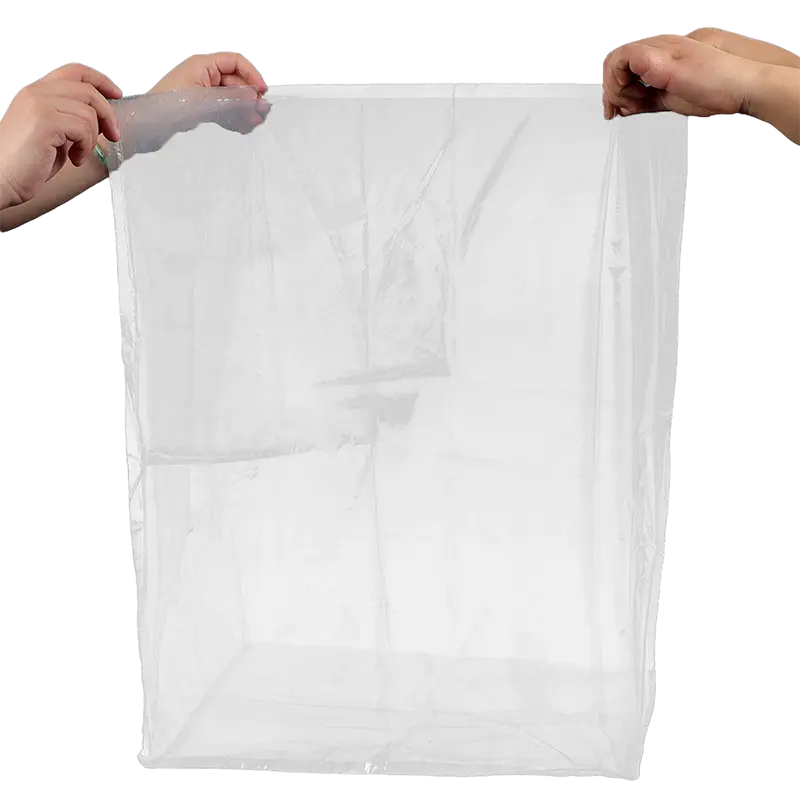
A Square-Bottom Plastic Bag is a packaging format built with a structured base that lets it stand upright on its own, unlike a conventional flat pouch that collapses without support. That single structural difference changes how a product fills, stacks, ships, and sits on a shelf. Buyers who treat bag selection as a purely visual decision often end up with packaging that fights their filling line or fails during transport.
What Makes a Square-Bottom Plastic Bag Different
A square-bottom plastic bag is defined by its formed base, which spreads the weight of the product across a flat footprint instead of concentrating it along a single seam. This is what separates it from a basic flat bag: the structure lets the package hold its shape once filled, stand without external support, and stack more predictably on a pallet.
How the Bottom Structure Handles Load
Once product is loaded, weight settles into the formed base rather than pulling on the side seals. Granular and powdered goods in particular benefit from this, since uneven settling is what usually causes seam stress and slow leaks in flat-bag formats.
- 1Stable base that resists tipping during filling and storage
- 2Larger flat surface area for branding and required labeling
- 3Compatibility with automatic and semi-automatic filling lines
- 4More predictable stacking behavior on pallets and shelving
Where Square-Bottom Plastic Bags Are Used
Square-bottom formats show up wherever a product needs to stand, stack, and survive handling without special outer packaging. The four industries below account for most demand.
A square-bottom plastic bag is engineered so that product weight, not seam strength, carries the load — which is why it tolerates heavier fill weights than a flat bag of the same film thickness.
| Industry | Typical Product | Primary Requirement |
| Food packaging | Grains, flour, rice | Moisture control and clean handling |
| Pet food | Kibble, treats | Puncture resistance and standing display |
| Agriculture | Seeds, dry feed | Moisture barrier and storage stability |
| Industrial materials | Powders, granules | Load capacity and seam strength |
Square-Bottom Plastic Bag vs Flat Plastic Bag
The comparison below is the one most buyers actually need before switching formats or specifying a new packaging line.
Square-Bottom Bag
Stands upright unsupported, distributes load across a formed base, stacks predictably, and offers a larger flat panel for print. Better suited to automated filling lines and heavier products.
Flat Plastic Bag
Lower material cost per unit, simpler construction, and adequate for lighter products or applications where upright standing and stacking are not priorities.
How to Choose the Right Square-Bottom Plastic Bag
Selecting the correct bag comes down to matching five variables to the actual product and process, not to nominal bag size.
- Product weight and density — two products at the same weight can need different bag dimensions if their density differs.
- Film structure and thickness — thicker film is not automatically better; it should match puncture risk and transport conditions.
- Filling method — bag opening and dimensions must match manual or automatic filling equipment.
- Sealing requirement — seal strength needs to reflect actual fill weight, not just industry convention.
- Transportation and storage conditions — pallet stacking height and handling method affect the durability needed.
Common Mistakes When Buying Square-Bottom Plastic Bags
Most packaging failures trace back to one of three decisions made before the bag ever reaches the filling line.
Buying on Price Alone
Unit price does not reflect seam strength, print quality, or how many bags fail per pallet.
Ignoring Product Density
Density changes fill volume and bottom load even when total weight stays the same.
Skipping Equipment Fit
A bag that does not match the filling line creates bottlenecks no material upgrade can fix.
Working With a Square-Bottom Plastic Bag Manufacturer
A capable Square-Bottom Plastic Bag manufacturer should be evaluated on consistency, not just catalog range: stable film dimensions, repeatable seal strength, and the ability to recommend a structure based on the buyer's actual product and packaging line rather than a generic default. That consistency is what determines whether the packaging performs the same way on batch one hundred as it did on batch one.
Frequently Asked Questions
What is a square-bottom plastic bag used for?
It is used for products that need to stand upright and stack reliably, including dry food, pet food, animal feed, agricultural goods, and industrial powders or granules.
Is a square-bottom plastic bag stronger than a flat bag?
It typically handles heavier fill weights better because the formed base distributes load across the bottom instead of concentrating stress on the side seams.
Can square-bottom plastic bags run on automatic filling lines?
Yes, when the bag opening, dimensions, and bottom construction are specified to match the filling and sealing equipment being used.
Does thicker film always mean a better square-bottom bag?
No. Film thickness should be matched to product weight, puncture risk, and transport conditions rather than assumed to scale with quality.
LATEST POST
Let’s create something amazing together
contact usFeatured Products

CONTACT DETAILS
- Address:No. 241, Yaojiafan, Zhangpanqiao, Shushan Street, Xiaoshan District, Hangzhou City, Zhejiang Province, China
- TEL:+86-0571-83175630
- Phone:+86-13336160217
- Email:[email protected]
- WeChat/WhatsApp:+86-18058115265
PRODUCTS
NEWS CENTER
MOBILE TERMINAL
Copyright© Zhejiang Geruite Packaging Materials Co., Ltd. All Rights Reserved.
Privacy Wholesale industrial packaging tape Manufacturers