-
 +86-0571-83175630
-
 [email protected]

 English
  Español
  عربى
عربى 
BOPP Tape Guide: How It's Made, Properties, and How to Choose It
Content
BOPP tape is the most widely used packaging tape in the world, but the differences between grades, thicknesses, and adhesive types have a real impact on how well a carton holds up in transit. Here's a full breakdown of what it is, how it's produced, and how to select the right specification.
What Is BOPP Tape?
BOPP tape stands for Biaxially Oriented Polypropylene tape — a pressure-sensitive adhesive tape built on a polypropylene film that has been stretched in two directions (lengthwise and widthwise) during manufacturing. This biaxial stretching is what gives the film its defining characteristics: high tensile strength, clarity, and resistance to tearing, all while remaining thin and lightweight.
It's the tape most people picture when they think of standard carton sealing tape — clear or tan, sold on large rolls, applied by hand dispenser or automated case sealer. BOPP has largely replaced older cellophane and cloth-based tapes in general packaging because it offers a better strength-to-cost ratio and holds up across a wider temperature range.
Quick definition: BOPP tape = biaxially stretched polypropylene film + pressure-sensitive adhesive coating, used mainly for carton sealing and general packaging.
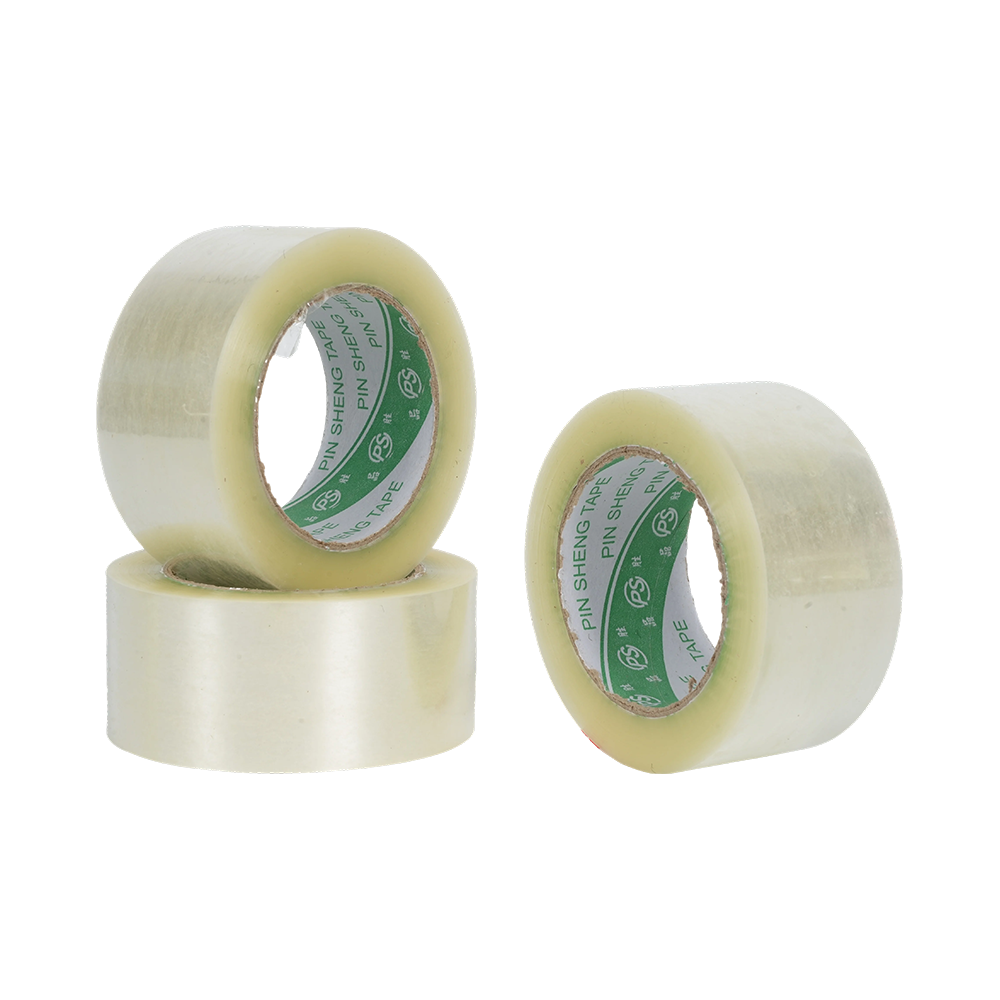
How Is BOPP Tape Made? (Manufacturing Process)
BOPP tape production happens in two broad stages: film production and adhesive coating.
- Film extrusion. Polypropylene resin is melted and extruded into a thick sheet.
- Biaxial orientation. The sheet is stretched simultaneously (or sequentially, depending on the line) in the machine direction and the cross direction, typically at ratios of around 5:1 in each direction. This realigns the polymer chains and is what gives BOPP film its strength and clarity compared to unstretched polypropylene.
- Surface treatment. One side of the film undergoes corona treatment (a controlled electrical discharge) to raise its surface energy so adhesive will bond to it properly — untreated BOPP film is naturally too slick for adhesive to grip.
- Adhesive coating. An adhesive — most commonly acrylic or hot-melt (rubber-based) — is applied to the treated side in a thin, even layer.
- Curing and slitting. The coated film is dried/cured, then slit into master rolls and finally into the narrower widths sold commercially (typically 48mm for standard carton sealing tape).
How Does BOPP Tape Work?
BOPP tape functions as a pressure-sensitive adhesive (PSA) product — meaning it bonds on contact with light pressure, without needing heat, water, or solvent activation. Two layers work together to create the seal:
- The film backing provides tensile strength and tear resistance, keeping the tape from stretching or snapping under load during transit or when the carton flexes.
- The adhesive layer flows slightly into the microscopic texture of the cardboard surface on contact, then builds "tack" over the following seconds to minutes, reaching full bond strength (its ultimate adhesion) after roughly 24 hours.
This is why a freshly sealed carton can sometimes be opened more easily than one sealed a day earlier — the adhesive is still in the process of reaching maximum bond strength.
What Is BOPP Tape Used For?
Carton Sealing
The dominant use case — e-commerce, warehousing, retail distribution
Bundling & Palletizing
Securing groups of items or reinforcing pallet loads
Printed Branding Tape
Custom-printed BOPP tape used for brand visibility and tamper evidence
General Industrial Use
Masking, splicing, general fastening in warehouse and light manufacturing settings
It's not typically used for heavy-duty structural bonding, high-temperature applications, or surfaces that need repositioning — those needs are better served by filament tape, cloth tape, or specialty adhesives.
BOPP Tape Adhesive Types
The adhesive used has a bigger effect on real-world performance than most buyers expect. The two dominant types are:
| Adhesive Type | Characteristics | Best For |
|---|---|---|
| Acrylic (water-based) | Clear, UV-resistant, ages well, moderate initial tack | Long-term storage, outdoor/sunlight exposure, temperature swings |
| Hot-melt (rubber-based) | Strong instant tack, works well on cold or dusty cartons | High-speed automated sealing, cold-chain/cold-storage shipping |
Acrylic tends to be the default choice for standard e-commerce shipping because of its aging stability, while hot-melt is favored in high-throughput fulfillment centers where instant grip on fast-moving conveyor lines matters more than long-term UV stability.
BOPP Tape Properties and Applications
Key physical properties that determine how a given BOPP tape will perform:
- Tensile strength — resistance to stretching or snapping under load; important for tapes used in bundling or reinforcing heavy cartons.
- Elongation at break — how far the film stretches before failing; higher elongation gives more tear resistance during rough handling.
- Peel adhesion — how strongly the tape bonds to the carton surface; measured in force per unit width.
- Shear strength (holding power) — resistance to the tape slipping under sustained load, which matters most for bundling and palletizing.
- Temperature range — most standard BOPP tape performs reliably between roughly -10°C and 60°C; cold-application grades are formulated for sub-zero environments like cold storage.
BOPP Tape Thickness Guide
Thickness is measured in microns (µm) or mils, and directly affects strength, cost, and how many boxes a roll can seal.
| Thickness | Typical Use |
|---|---|
| 28–35 microns | Light general-purpose carton sealing, low-cost bulk shipping |
| 40–45 microns | Standard e-commerce and retail carton sealing |
| 50–65 microns | Heavy cartons, export shipping, rougher handling conditions |
| 70+ microns | Industrial bundling, reinforcement, high-stress applications |
Benefits of BOPP Tape
- Cost-effective at scale — lower material cost per meter than cloth or filament tape, which matters significantly in high-volume packaging operations.
- Consistent performance — manufacturing tolerances are tight, so rolls behave predictably across an automated sealing line.
- Good clarity — clear grades allow printed barcodes or labels underneath to remain scannable.
- Moisture and chemical resistance — polypropylene film itself doesn't absorb water, so bond strength holds up in humid warehouse conditions.
- Printable surface — accepts flexographic printing well, making it a common substrate for branded packaging tape.
How to Choose BOPP Tape
Work through these questions before specifying a tape for a packaging line:
- What's the carton weight and handling environment? Heavier cartons or rougher freight routes call for higher thickness and tensile strength.
- Is sealing manual or automated? Automated case sealers generally perform better with hot-melt adhesive for its fast initial tack; manual dispensing works well with either type.
- What's the storage or shipping temperature? Cold-chain shipments need a cold-application adhesive formulation rather than standard acrylic or hot-melt.
- Does the box need to travel long distances or sit in storage for weeks? Acrylic adhesive holds bond strength better over long timeframes and UV exposure than hot-melt.
- Is branding or tamper evidence needed? If so, a custom-printed BOPP tape adds visibility and a basic layer of tamper detection at minimal added cost.
Practical tip: For most standard e-commerce shipping, 45-micron acrylic tape on a 48mm roll covers the majority of use cases reliably — reserve thicker or hot-melt grades for heavier cartons or higher-speed automated lines.
LATEST POST
Let’s create something amazing together
contact us
CONTACT DETAILS
- Address:No. 241, Yaojiafan, Zhangpanqiao, Shushan Street, Xiaoshan District, Hangzhou City, Zhejiang Province, China
- TEL:+86-0571-83175630
- Phone:+86-13336160217
- Email:[email protected]
- WeChat/WhatsApp:+86-18058115265
PRODUCTS
NEWS CENTER
MOBILE TERMINAL
Copyright© Zhejiang Geruite Packaging Materials Co., Ltd. All Rights Reserved.
Privacy Wholesale industrial packaging tape Manufacturers